Una menorà e due shofarot
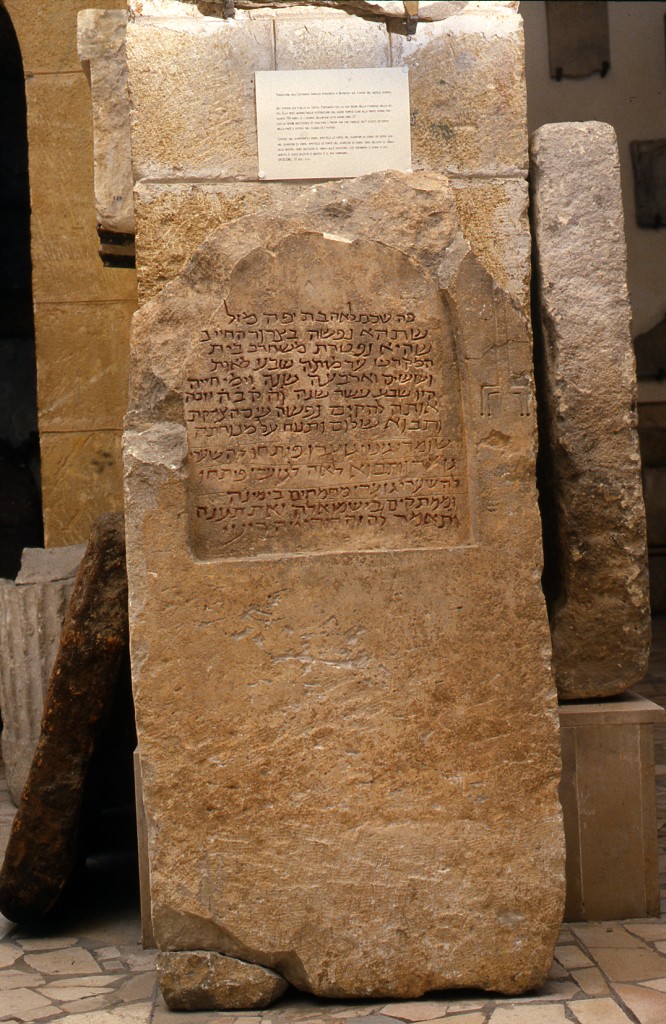
A fragmentary limestone cippus, broken at the top, bears witness to a Jewish presence in Byzantine Italy. On the right-hand side of its face, the base and part of the stem of a menorah are incised into the stone. Both flanks of the cippus are decorated with a shofar, the ritual ram’s horn, though the one on the left long side is particularly damaged.
The cippus was discovered in an area that had served as a necropolis since the archaic period. In the Byzantine era, such funerary markers often combined Jewish symbols with the local stone-working traditions of the region. The menorah, a seven-branched lampstand, and the shofar, a horn blown on religious occasions, were common motifs in Jewish funerary art of this time, expressing identity and hope beyond the grave. This modest but resonant object offers a tangible link to a community that lived and died here, its faith carved into the local limestone.
Description via source. Coordinates and heritage data from the Atika atlas.