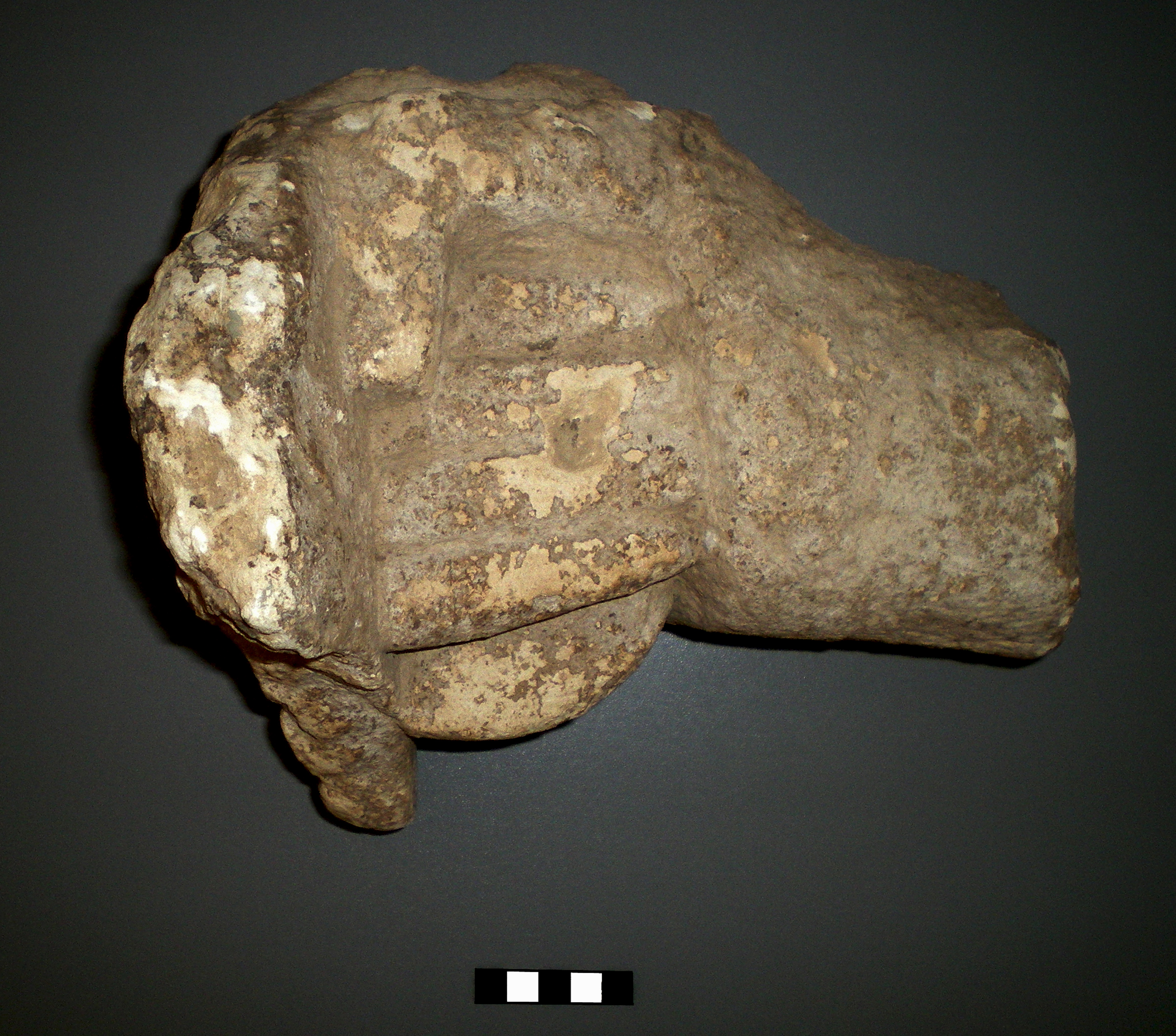
statua, guerriero
A right hand, carved from fossiliferous limestone, grips a sword hilt. The thumb is bent sharply at ninety degrees over the index and middle fingers, a gesture of tense readiness. The hand rests against the back of a circular shield, its wrist protected by a gauntlet decorated with dense chevron patterns running in horizontal bands. Two deep grooves mark the wrist joint, emphasising the sinewy tension of the pose.
The sword’s blade is missing, it was probably made separately, of metal or wood, intended to slot into the elliptical socket still clearly visible in the hilt. The surviving shield fragment shows radial ribbing, dividing its outer face into neat fields.
This fragment was once part of a full warrior statue, likely a funerary or votive monument. Roman military sculpture often emphasised individual equipment and posture, signalling rank and valour. Here, the fossilised shell fragments in the stone catch the light oddly, as though the hand itself were petrified mid-grip, an accidental echo of the martial stillness the sculptor intended.
Description via source. Coordinates and heritage data from the Atika atlas.