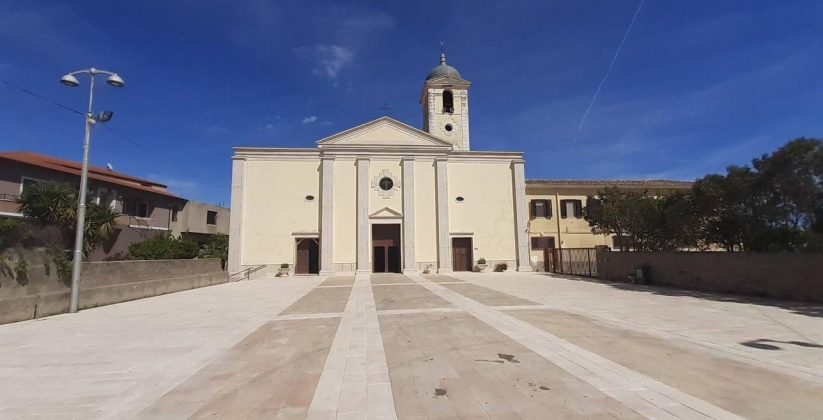
santuario, parrocchia, Santissimo Crocifisso
This church, raised to a parish only in 1975, has long been considered a sanctuary by local devotion. Its focus is a wooden crucifix carved by the Franciscan friar Umile da Petralia between 1630 and 1638, which sits in a niche above the high altar. To this crucifix many miracles are attributed, and the principal feast on 3 May draws a great crowd, preceded by nine days of prayer. Every seven years, the statue is carried in procession to the mother church on 30 April, remaining there until it is returned on the afternoon of 3 May.
The convent was begun in 1589, dedicated to the Most Holy Saviour and built through the intervention of a local superior of the Reformed Franciscans. Through the seventeenth and eighteenth centuries it housed, on average, ten to twelve friars. Decline set in after the devastating Calabrian earthquake of 1783, when the convent was suppressed and the friars expelled, its property seized by the Bourbon government to fund reconstruction.
Description via source. Coordinates and heritage data from the Atika atlas.