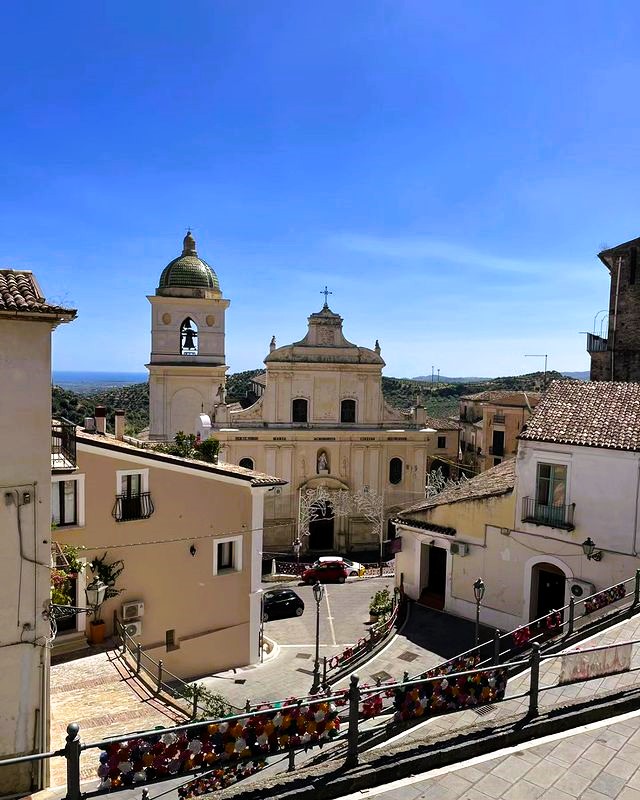
santuario, mariano, Maria SS.ma Achiropita
The sanctuary fronts a triangular piazza at the heart of the old town, its presence recorded as early as the late 11th century. It replaced an earlier Byzantine church when the Normans elevated the diocese to a metropolitan see, on the site of a hermit’s oratory where an icon of the Madonna ‘Achiropita’, ‘not made by human hands’, was venerated. The structure follows Gothic-Angevin lines, though centuries of transformation and restoration have left their mark. Inside is a silver bust of the Achiropita, dated 1768, which is carried in procession each August. Adjoining the sacred space, since 1952, the Diocesan and Codex Museum holds the Codex Purpureus, a 6th-century Greek evangelary from Caesarea in Palestine, among the oldest and richest of Byzantine illuminated manuscripts, recognised as a UNESCO World Heritage site in 2015.
Description via source. Coordinates and heritage data from the Atika atlas.