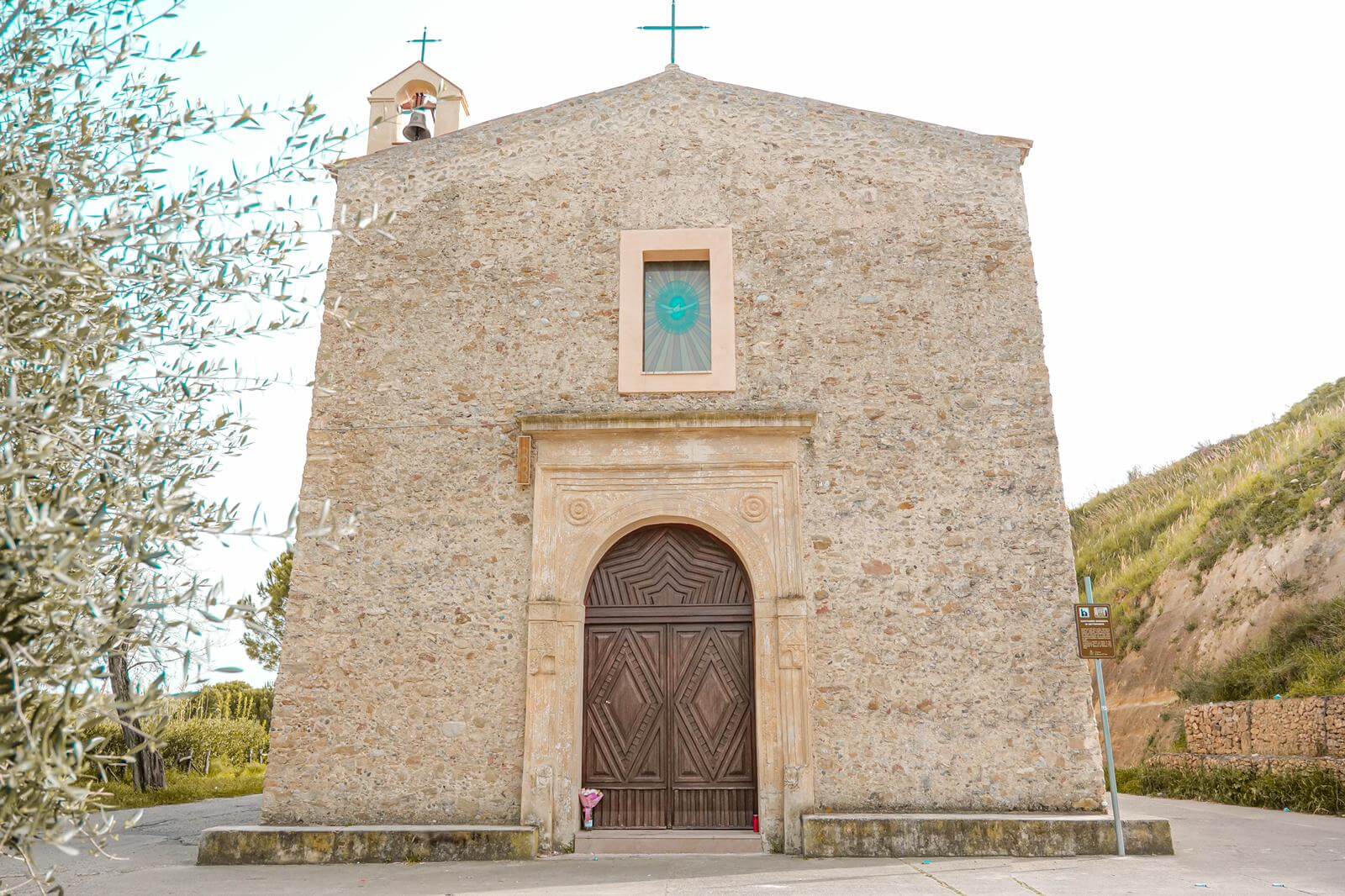
santuario, Madonna delle Setteporte
The Santuario della Madonna delle Setteporte, built in 1662, stands as a Baroque-era church in Italy, its origins rooted in a story of survival. The cult of the Madonna delle Setteporte dates to the mid-15th century, when local legend attributed to her the seven political and economic privileges granted by Ferdinand of Aragon to the persecuted people of Rocca di Neto. In gratitude, a small hermit’s chapel was built, housing an image of the Madonna.
The main feast is held on the first Sunday of May, preceded by nine days of prayer. A striking tradition sees some of the faithful, particularly women, walking barefoot to the sanctuary, 'Scavuza ara Madonna', in thanks for a grace received. They carry the 'pupatulo', a sweet bread shaped like a human figure or a healed body part, offered as an ex-voto. This blend of Baroque architecture, historical memory, and tangible folk devotion makes the sanctuary a quietly powerful place.
Description via source. Coordinates and heritage data from the Atika atlas.