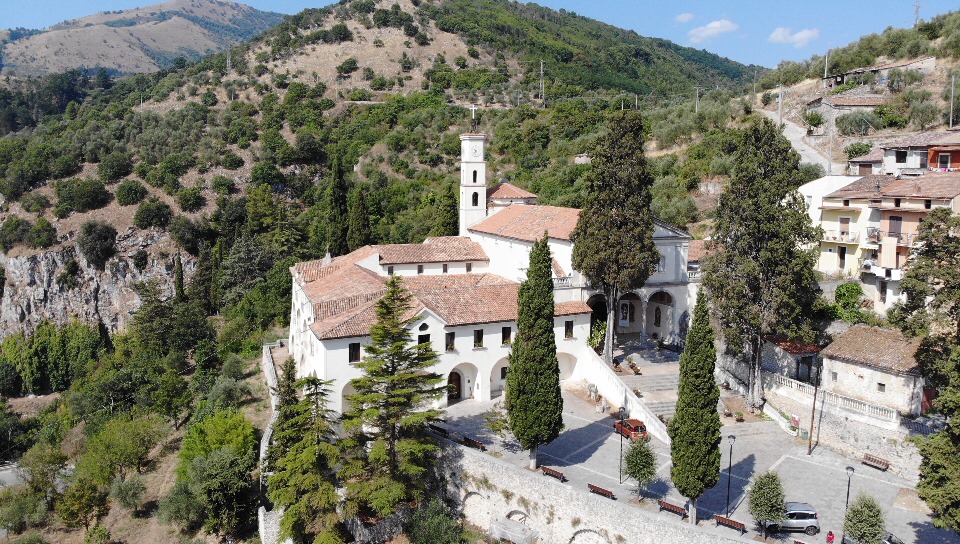
santuario, diocesano, Sant'Antonio di Padova
Just beyond the city walls, the Santuario di Sant’Antonio stands as a singular synthesis of Renaissance sobriety and Baroque richness. Built for the Observant Franciscans, the church was finished in 1541, though the friars did not settle until 1550, their presence formalised by a papal bull three years later. A severe earthquake in 1561 forced extensive reconstruction, reshaping both structure and decoration; traces of the original ornament remain visible on the walls. The convent was completed in 1593, and the entire complex consecrated four years after. The local community, the Universitas, that had funded the work later commissioned a chapel dedicated to John the Baptist, demolished in the early 1600s to make way for a new apse. The result is a remarkable monument: sober architecture, stupendous frescoes, precious canvases, and numerous wooden sculptures create an unrivalled synthesis of Franciscan art, history, and spirituality.
Description via source. Coordinates and heritage data from the Atika atlas.