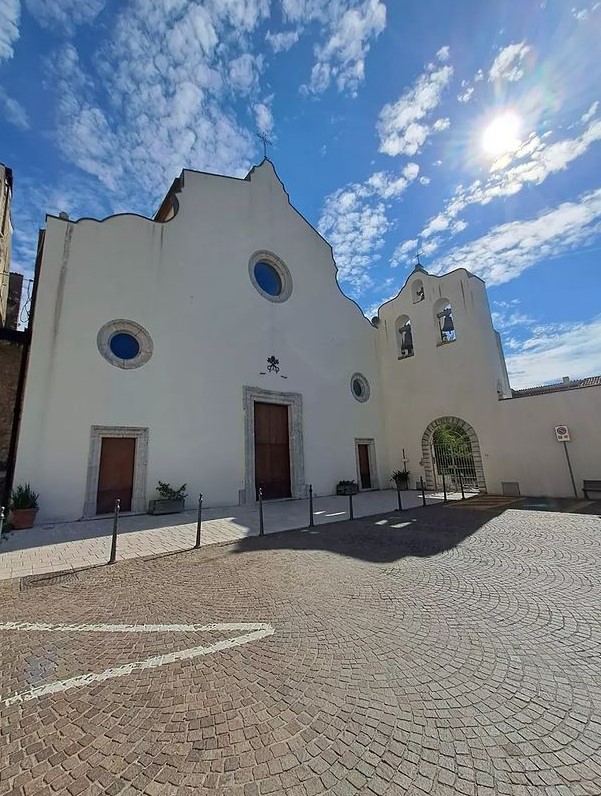
santuario, basilica, Santa Maria Assunta e San Filippo Neri
In a landscape of Italian Baroque, this church dedicated to the Assunta and San Filippo Neri offers something more elusive: a visible conversation between centuries. Its baroque frame does not entirely conceal older layers. The apse, built of rough, un-squared stone blocks, and the interior columns of bare pietra speak of an earlier Romanesque culture, while elegant rose-windows on the facade suggest a medieval inheritance. The building’s origins are uncertain, but its architectural bones point to the 17th century, though an earlier foundation is certain. In the first half of the 1700s, a wooden coffered ceiling was added, gilded and partly carved, with paintings applied directly to the boards. The church was entrusted to the Oratorians, the congregation founded by San Filippo Neri. Raised to a Sanctuary in 1955 and granted the title of Minor Basilica in 1989, it remains a parish church where the penitential processions noted as early as 1455 still echo in the stone.
Description via source. Coordinates and heritage data from the Atika atlas.