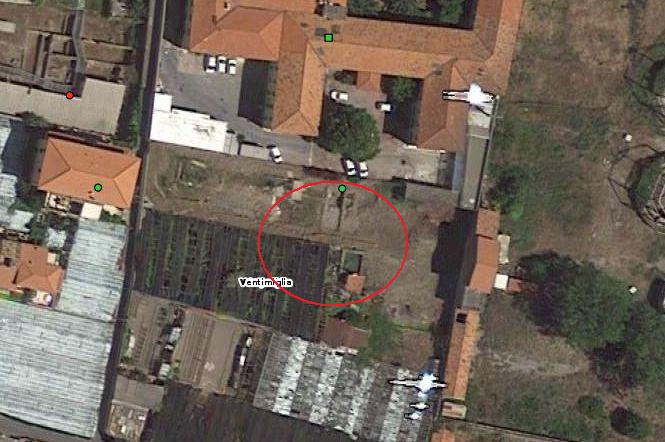
PORTA MARINA
South of the baths, the area of Porta Marina was first noted in 1884 by Girolamo Rossi as a passage through the city walls, three metres high and 1.7 wide, flanked by columns and what may have been a public building. Today the gate itself is localisable but not visible, near a modern well that reuses large blocks of Turbie stone and sandstone, clear spolia from a monumental Roman structure. A 2007 exploratory excavation here uncovered a stretch of basalt-paved road, its limestone slabs perfectly fitted. At the road’s edges, traces of the removed crepidines (sidewalks) remain visible where the paving stones were left unfinished; these walkways were about 40-50 cm wide and continuous along the entire exposed section. The carriageway measured 2.6 metres across, 3.4 with the sidewalks, and in two places the ruts of carts can still be read. Pottery finds, rims of African red slip ware and an amphora wall, date the road to between the late first and mid-second century AD, matching the dating of the main decumanus maximus. The materials and construction bear notable similarities to that main thoroughfare.
Description via source. Coordinates and heritage data from the Atika atlas.