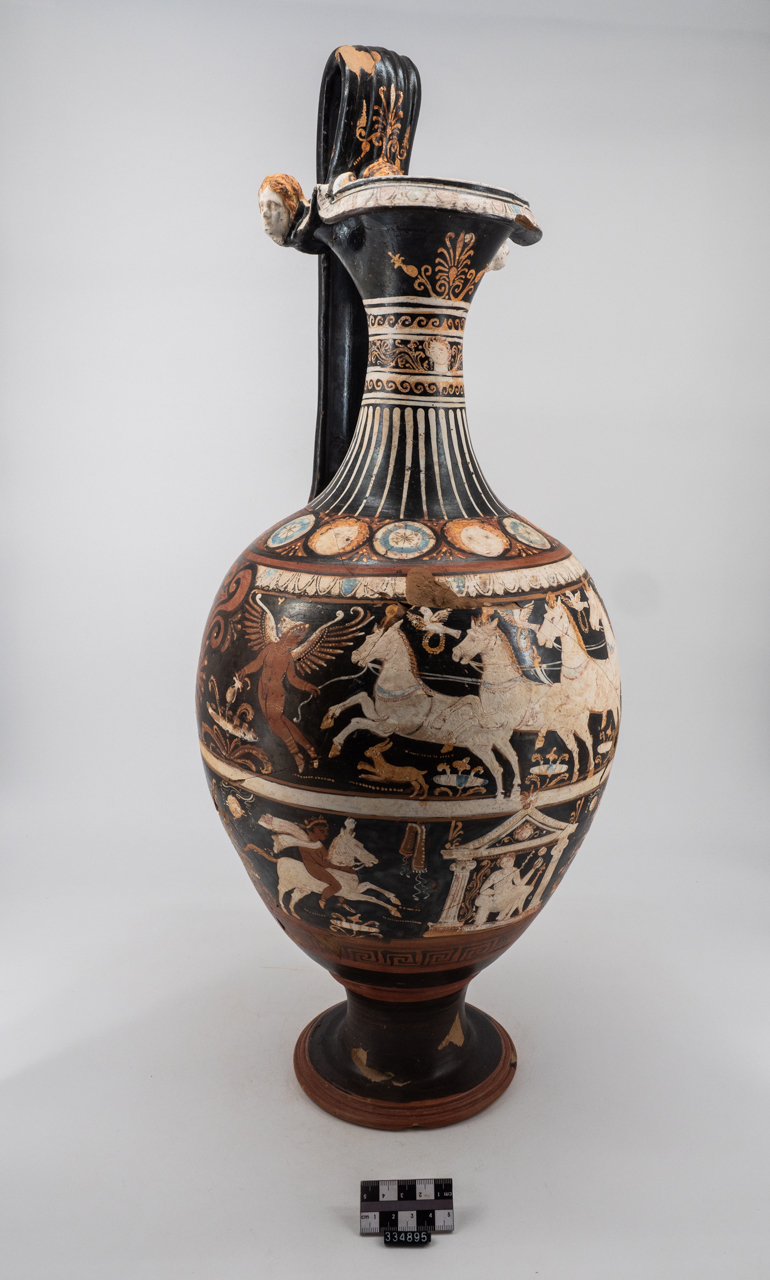
oinochoe
This small earthenware vessel, an oinochoe or wine jug, belongs to a group of seventeen pieces made expressly for burial. Its form is precise: a trefoil lip, flaring rounded rim, concave neck, rounded shoulder and globular body, set on a moulded bell-shaped foot. A ribbed strap handle rises above the rim, joining lip to shoulder, and at its attachment on the rim sits a triple plastic decoration of small heads.
The group from which this jug comes was commissioned specifically for deposition, and shows a more careful level of manufacture than the general workshop stock that may already have been in the possession of the deceased's family. The decoration is attributed to the Painter of the White Sakkos, an artist whose hand has been identified on one of the other vessels from this same Melfi group. Early Christian funerary practice often involved such purpose-made ceramic grave goods, reflecting both ritual provision and the status of the departed.
Description via source. Coordinates and heritage data from the Atika atlas.