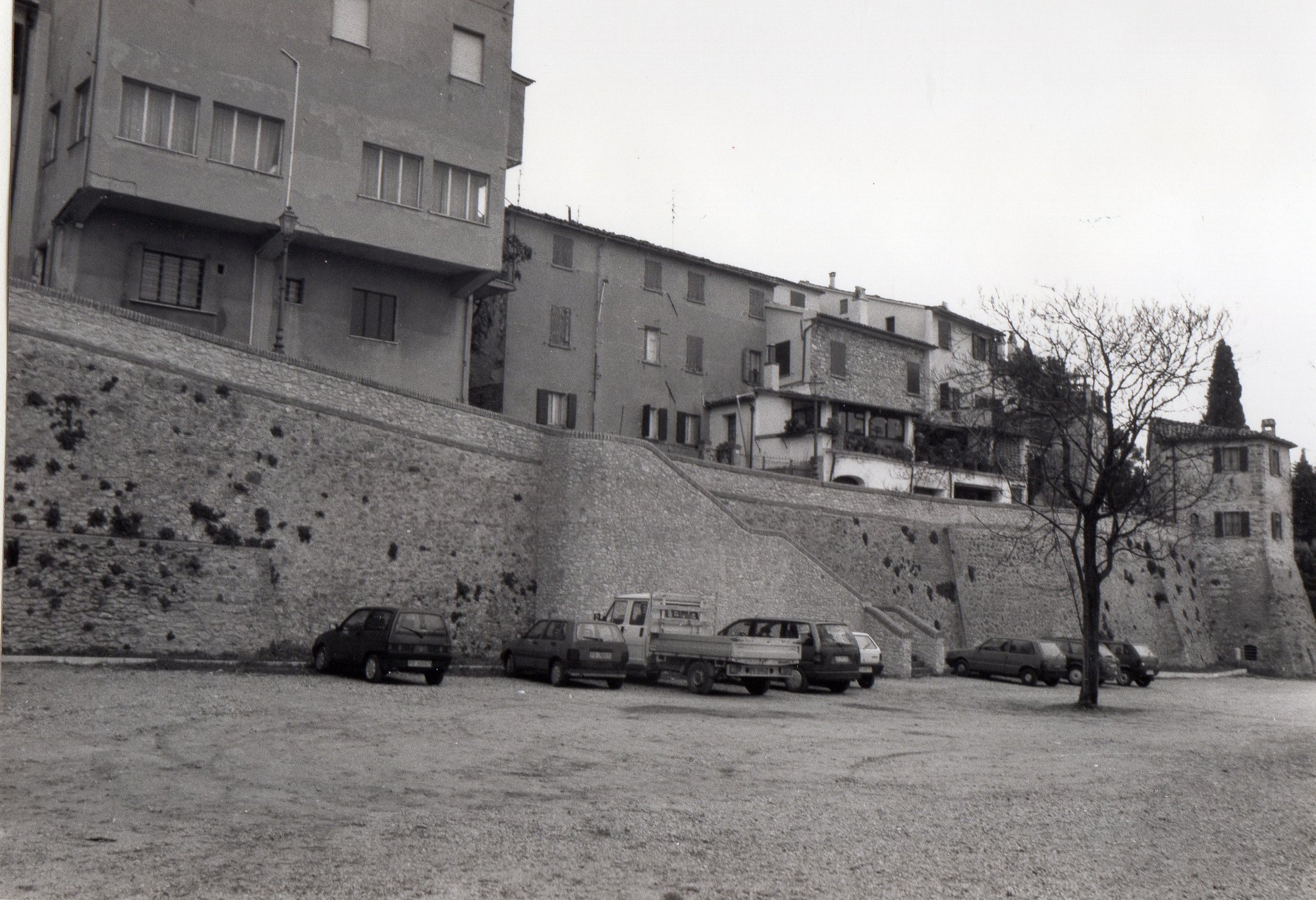
Mura comunali difensive
These defensive walls trace an uneven course around the town’s historic core, built in the characteristic scarpa style, a sloping masonry base designed to deflect artillery and resist sapping. The irregular stone courses are punctuated by rare brick details that mark the corners of the squat torrioni, or towers, which punctuate the circuit. Such fortifications were typical of the medieval and Renaissance periods across Italy, when hilltop settlements ringed themselves with stone to guard against sieges and raids. The walls are not a neat geometric enclosure but a pragmatic response to the terrain and the town’s evolving needs, rising and falling with the slope. Their rough-hewn blocks, weathered and lichened, speak to centuries of exposure and adaptation, a quiet, stony testimony to a time when every town had to be its own fortress.
Description via source. Coordinates and heritage data from the Atika atlas.