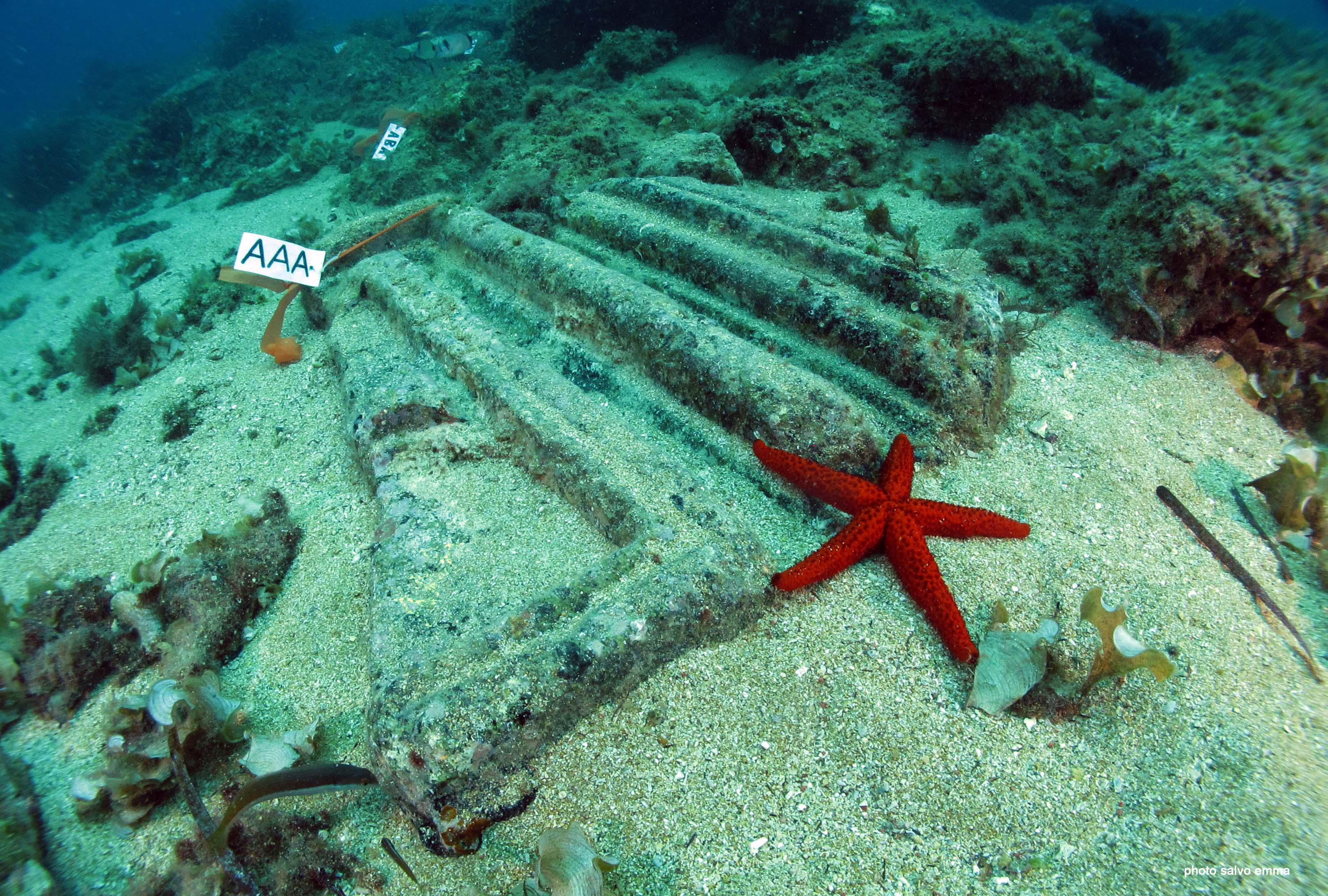
Marzamemi II S0311
Off the coast of Marzamemi, beneath the Sicilian sand, lies an extraordinary Roman-era shipwreck. Discovered in the 1960s, this site yielded not the usual cargo of amphorae or tableware, but something stranger: a complete set of architectural elements for an early Christian basilica. The ship was carrying columns, bases, and Corinthian capitals with large acanthus leaves, along with pilasters, balustrade fragments, and parts of an ambone, the raised pulpit from which the Gospel was read. Particularly striking are the plutei, or chancel slabs, each carved with a stylised wreath enclosing a Christogram with a six-armed cross. The marble, a green porphyry known as verde antico, likely came from quarries near Larissa in Greece. Alongside this sacred cargo, iron ship nails and the crew’s domestic pottery and wine-testing cup were found. It seems a sixth-century vessel, laden with a prefabricated church, sank before reaching its destination. The wreck was rediscovered in 2006 after four years of careful survey, and many fragments were raised for study and preservation, a Byzantine basilica, frozen in transit.
Description via source. Coordinates and heritage data from the Atika atlas.