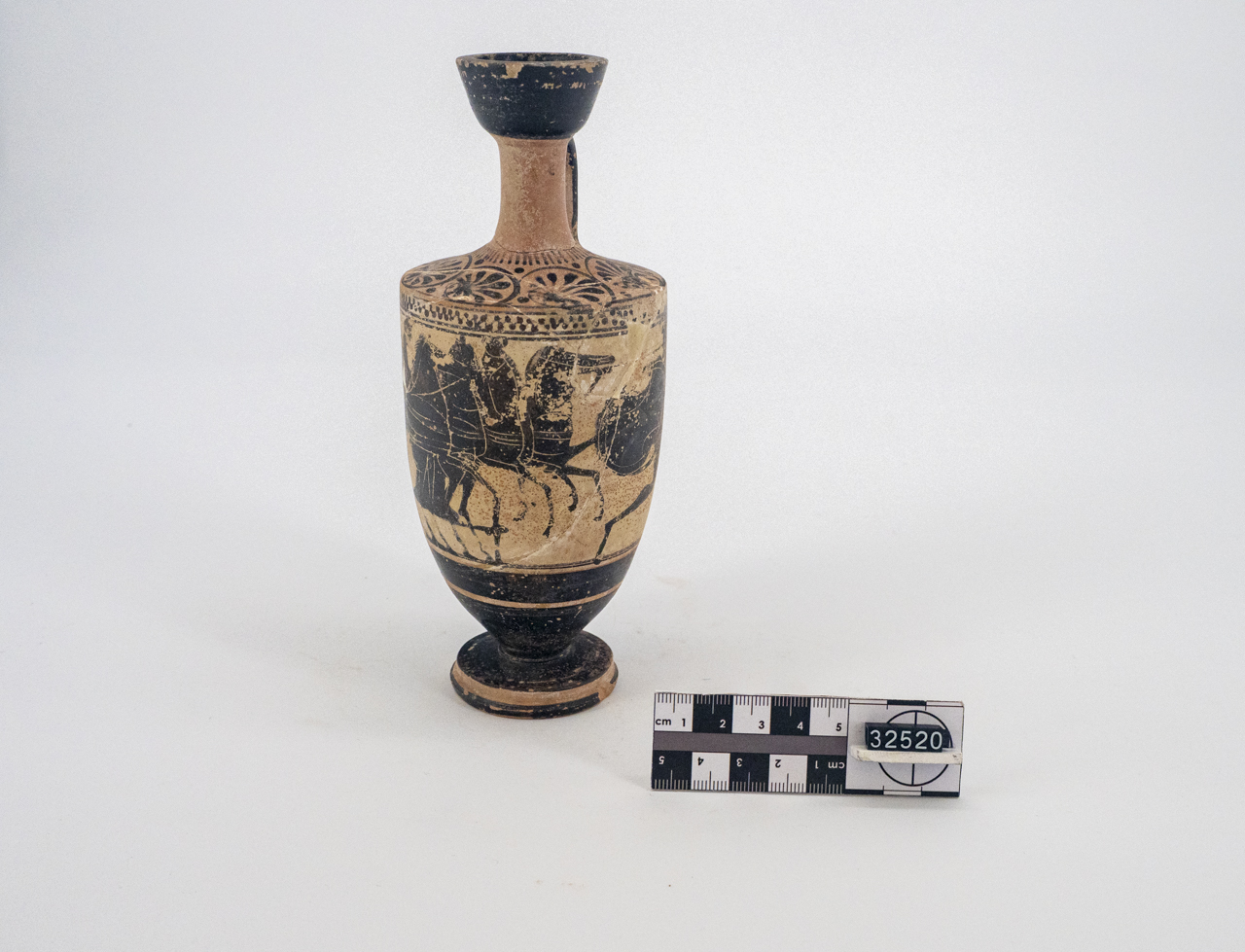
lekithos
This is a lekithos, a slender ceramic oil flask from early Christian Italy. Its form is precise: a flaring echinus lip, a cylindrical neck that meets a sharp-angled shoulder, and an elongated, ovoid body tapering to a disc foot with a conical hollow. A single ribbon handle arcs from the neck's base to the shoulder's edge.
The clay is a warm pink-orange. The potter gave the shoulder and neck a slip of the same colour, but coated the body in a whitish wash. Over this, a black gloss was applied, now faded and patchy. Such vessels were used to hold precious oils, often for funerary or ritual purposes. The careful shaping and layered finish suggest an object meant to be handled and seen, not merely stored. Its survival, with the delicate black paint still faintly visible, speaks to the quiet endurance of everyday sacred things.
Description via source. Coordinates and heritage data from the Atika atlas.