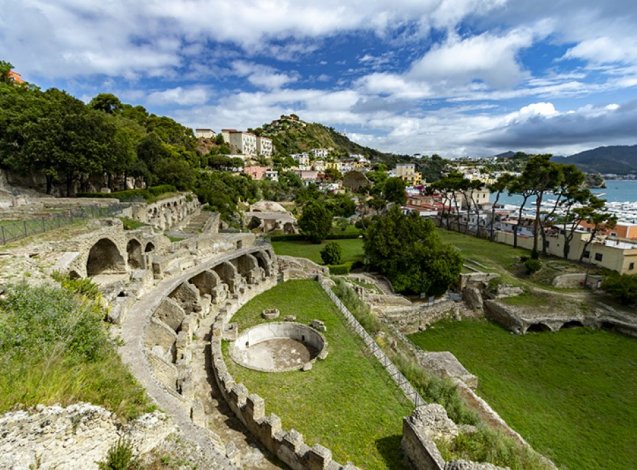
insediamento sparso, Parco archeologico delle terme di Baia
In the Roman world, Baiae was a byword for luxury and leisure, a coastal resort where the patrician class escaped the heat and politics of Rome. The archaeological park that survives today is a ghost of that opulence, its structures partly submerged by the same volcanic forces that made the spot so desirable. The geology of the Phlegraean Fields provided abundant thermal springs and vapours, while the local pozzolana, a volcanic sand, allowed engineers to experiment with daring architecture.
Three great domes dominate the site, once mistaken for temples of Diana, Mercury and Venus. They are in fact the halls of three separate bath complexes, built a century apart. These were not public baths but the private amenities of luxurious villae maritimae, designed for pleasure and display. The so-called ‘Temple of Diana’ is a remarkable feat: its surviving cupola shows what could be achieved with that light, volcanic concrete. Much of Baiae now lies beneath the sea, the victim of bradyseism, but what remains speaks of a world that built for delight, not duty.
Description via source. Coordinates and heritage data from the Atika atlas.