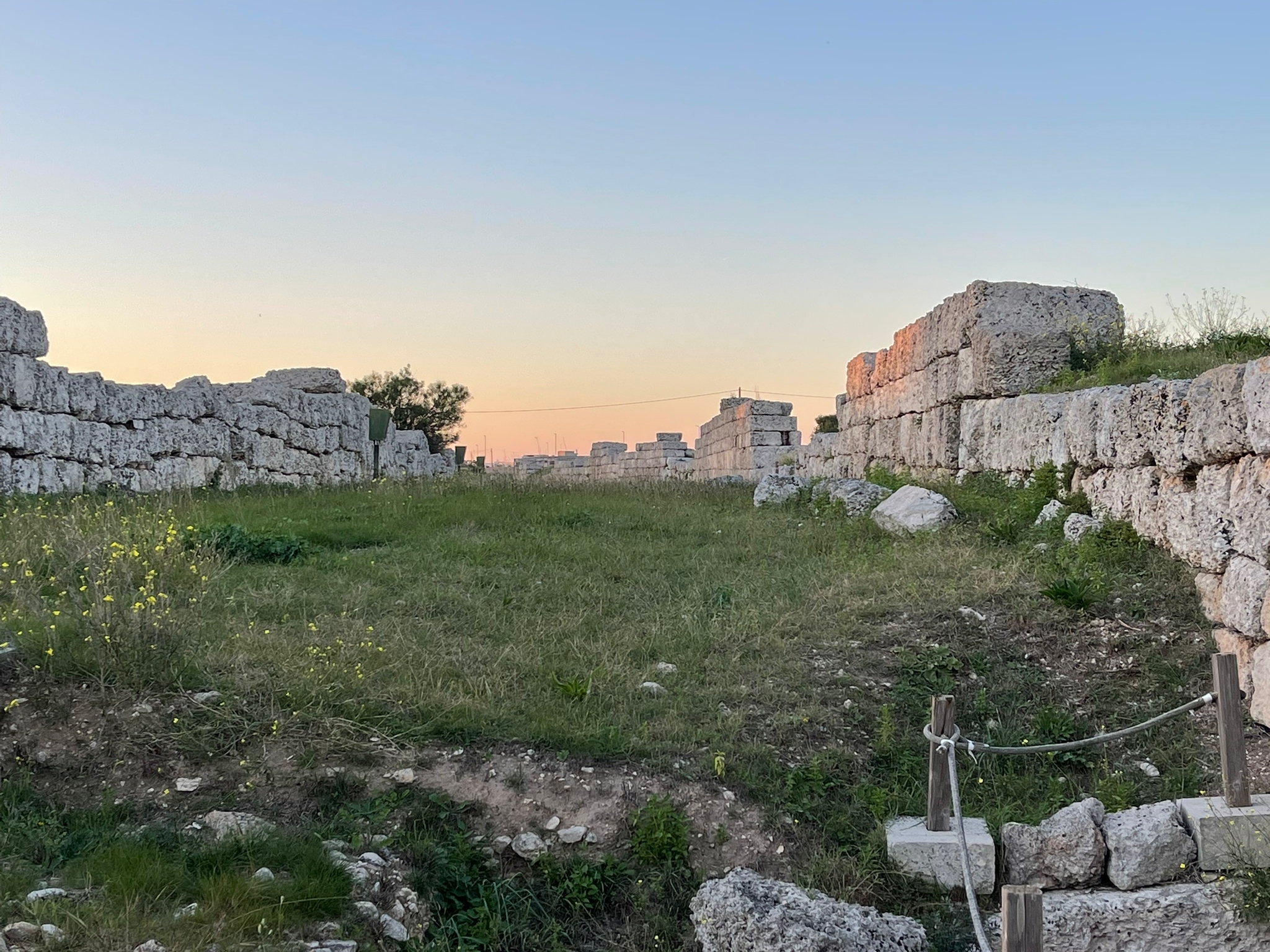
insediamento, insediamento fortificato, Parco archeologico delle Mura Messapiche di Manduria
At Manduria, the Parco Archeologico delle Mura Messapiche preserves a rare triple circuit of defensive walls, built between the fifth and third centuries BC by the Messapii, an indigenous people of pre-Roman Apulia. The innermost ring is the oldest; two ditches separate it from the middle wall, while the outer circuit, constructed in neat ashlar blocks (opus quadratum) and dating to the third century BC, survives best. These fortifications helped the Messapic settlement control the main routes to the nearby Greek colony of Taras (Taranto), a strategic advantage it shared with the contemporary centre at Oria.
The park’s best-known feature is the Fonte Pliniano, a spring-fed well inside a cave, reached by a rock-cut ramp, described by Pliny the Elder in his Natural History. The vast necropolis contains over 1,200 tombs, spanning the sixth to second centuries BC; their grave goods are partly displayed in the local archaeological museum. One chamber tomb was later reused as a Byzantine crypt, its frescoes still visible beneath a small, single-aisled thirteenth-century chapel built directly above it.
Description via source. Coordinates and heritage data from the Atika atlas.