fontana, pubblica, Fontanino
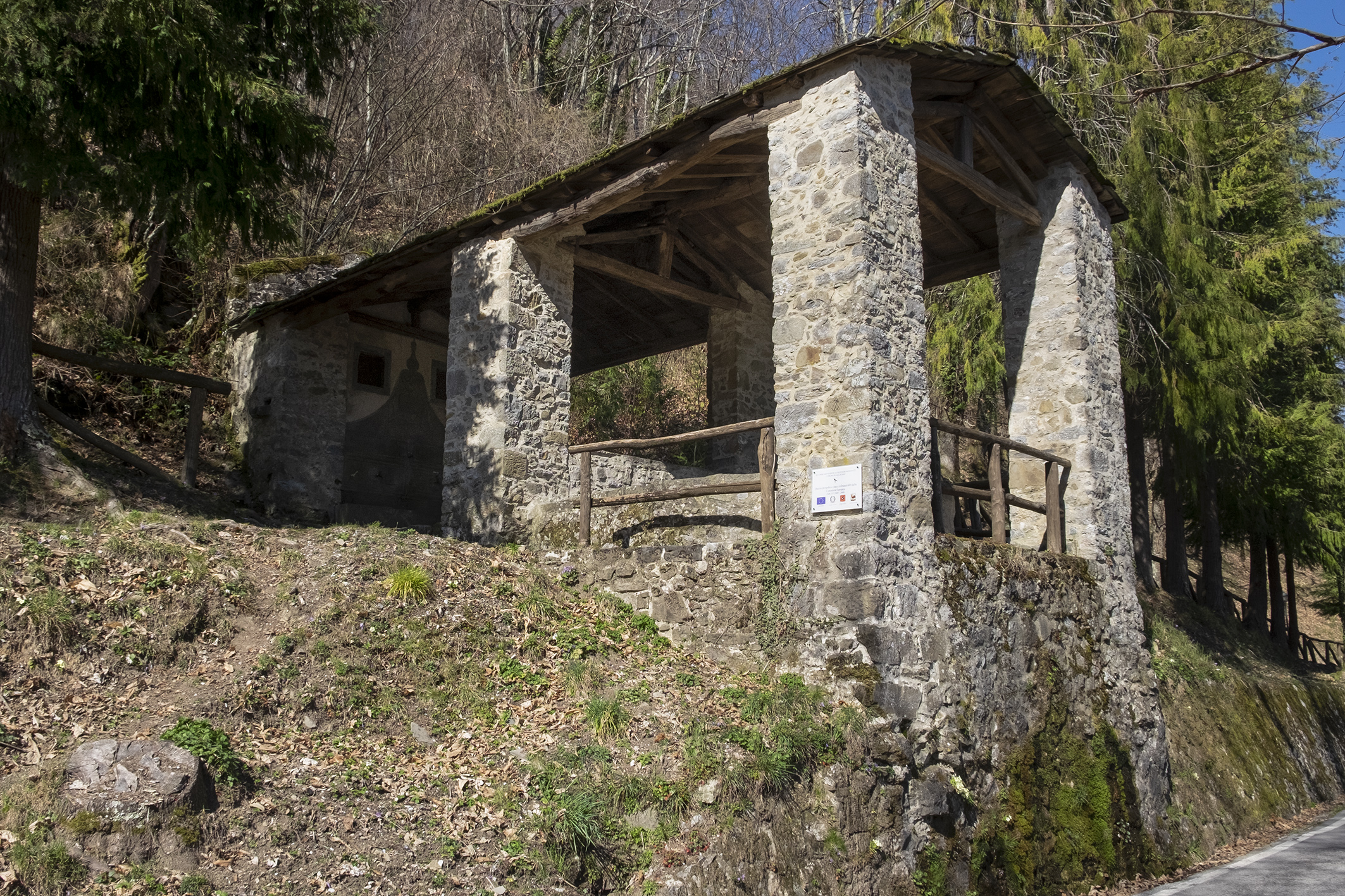
This modest stone structure is the terminal display of one of the village’s two water-supply sources. Assembled from several sandstone slabs with a sinuous, mixed-profile outline, the fountain is a workmanlike piece of Renaissance public works. From the cistern chamber, fitted with two taps for drawing water, a wooden canopy supported on masonry pillars extends to shelter the circular washing basin below. The basin receives its water via an underground pipe system; the whole structure follows the slope of the ground. Two small wooden hatches on the fountain’s facade allow access for cistern maintenance. It is an unassuming but crucial piece of civic infrastructure: a functional ensemble of stone, wood and water, designed not for show but for daily use, and now a quiet monument to the practical hydraulics that once sustained a community.
Description via source. Coordinates and heritage data from the Atika atlas.