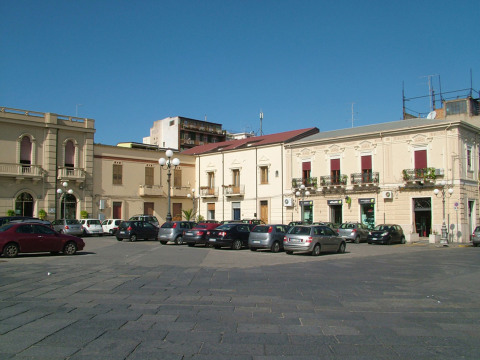
centro storico, pianificato, a scacchiera, Palmi, Carlopoli (denominazione storica), Palma (denominazione storica), Civitas Palmarum (denominazione originaria)
After the devastating earthquake of 1783, this Calabrian borgo was rebuilt according to a rational, rectilinear plan. Its current historic centre is a textbook example of Enlightenment-era reconstruction: a regular grid of blocks, with Corso Garibaldi as the main axis and Corso Umberto I running perpendicularly. The result is a remarkably orderly townscape of two- and three-storey buildings, among which stand several handsome patrician palaces of considerable historical and artistic value. Their façades are enriched with monumental portals and varied decorative details. The street layout remains largely Baroque, while the actual buildings mostly date from the late 19th century. Of the original defensive walls and sturdy corner towers, commissioned by Carlo I Spinelli, only a few fragments survive; the last were demolished in 1921 to open Via Rimembranze. The first settlement here was founded in 951 AD, after Saracen raids destroyed the Greek city of Taureanum. Later, Basilian monks established a monastery on Monte S. Elia, but little of that early medieval past is now visible on the ground.
Description via source. Coordinates and heritage data from the Atika atlas.