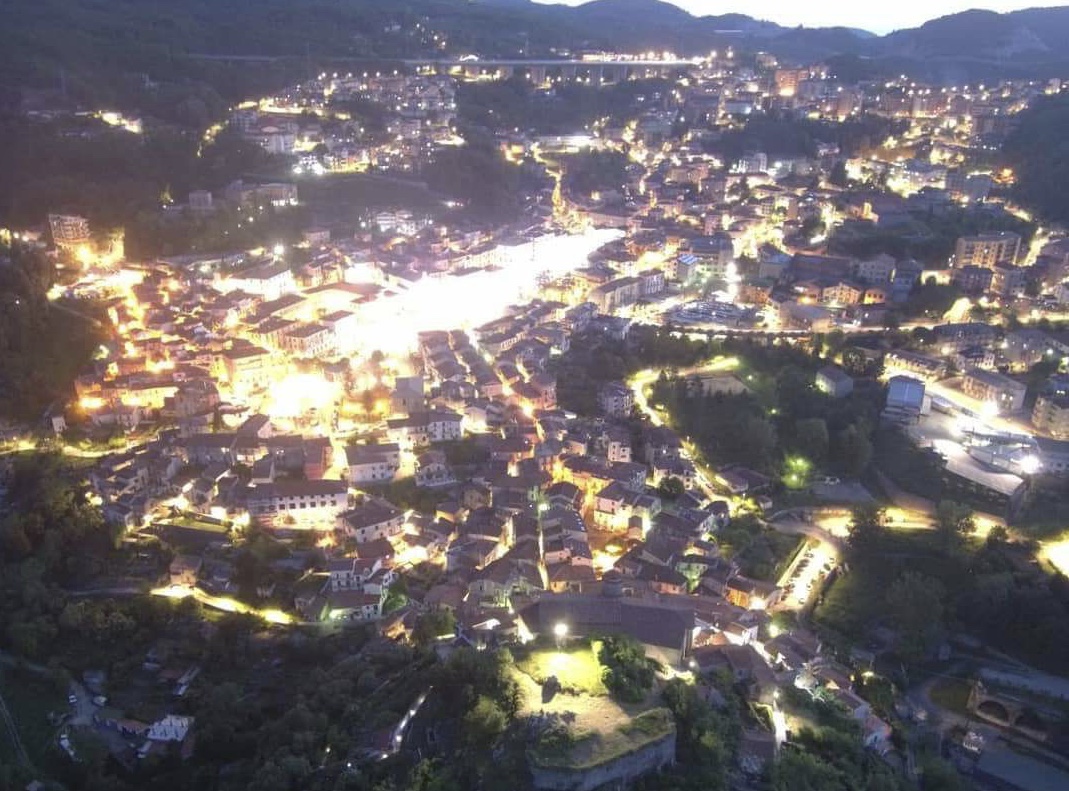
centro storico, montano, religioso, Lagonegro, Lacus Neruli (denominazione storica, epoca medievale), Lagoniro (denominazione storica, epoca medievale), Lacus Liber (denominazione storica, sec. XVII)
Lagonegro climbs the slopes in two distinct acts. The newer town gathers around a broad, gently sloping piazza, lined with plane trees and eighteenth- and nineteenth-century palazzi; its centrepiece is an ottocento fountain. Here stand the Trinity Church, enlarged in 1779 and restored in 1930, the eighteenth-century Palazzo Corrado, the nineteenth-century Madonna delle Grazie church, and Sant’Anna. The older, medieval core clings higher, around the ruins of the feudal castle. To reach it, you take a long stone staircase built in 1603 to replace the drawbridge, passing through the ‘Porta di Ferro’, a gate remodelled in the mid-1500s. Beyond, more steps lead to San Nicola di Bari, a church from the tenth century. This is a place of steep alleys and sudden vistas. The town’s origins are Byzantine, a ninth-century convent, though traces of a far older site, from the fifth or fourth century BC, have also been found. Its name, once Lacus Neruli or Lagoniro, speaks of a lake that is no longer there.
Description via source. Coordinates and heritage data from the Atika atlas.