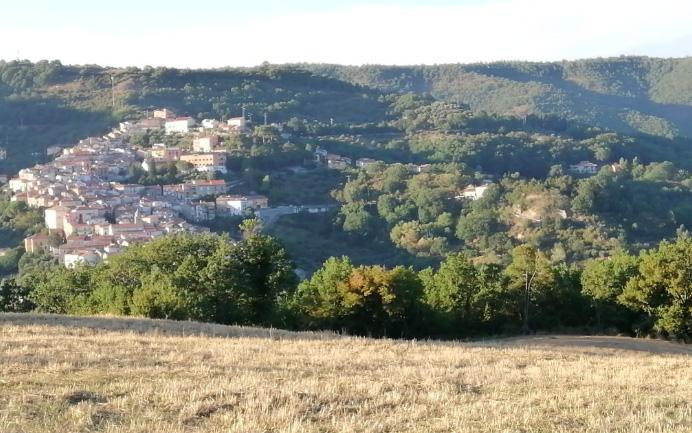
centro storico, montano, agricolo, religioso, Carbone, Carbouni (denominazione storica, cit. 1125), Carbona (denominazione storica, Regno di Napoli), Carbone (denominazione storica, Regno di Napoli), Carbuni (denominazione storica, Regno di Napoli)
A mountain borgo of medieval origin, Carbone has kept much of its original urban layout. The old quarter is punctuated by a number of noble houses and gentry residences, including Palazzo Castello, Palazzo De Nigris and Palazzo Castronuovo, and decorated with fine stone portals. Characteristic stone houses and narrow alleys complete the scene.
The first certain historical records date from around the year 1000, linked to the foundation of the monastery of Sant’Elia by Basilian monks fleeing the Iconoclast controversy in the East. This monastery’s influence on the local economy and land use proved decisive until the 18th century. The toponym may derive from the charcoal (carbone) produced from the surrounding forests, or from the monastery’s first abbot, Luca Carbone.
The 16th-century churches of San Francesco (built 1547) and San Luca contain various objects salvaged from the now-ruined monastery of Santi Elia e Anastasio.
Description via source. Coordinates and heritage data from the Atika atlas.