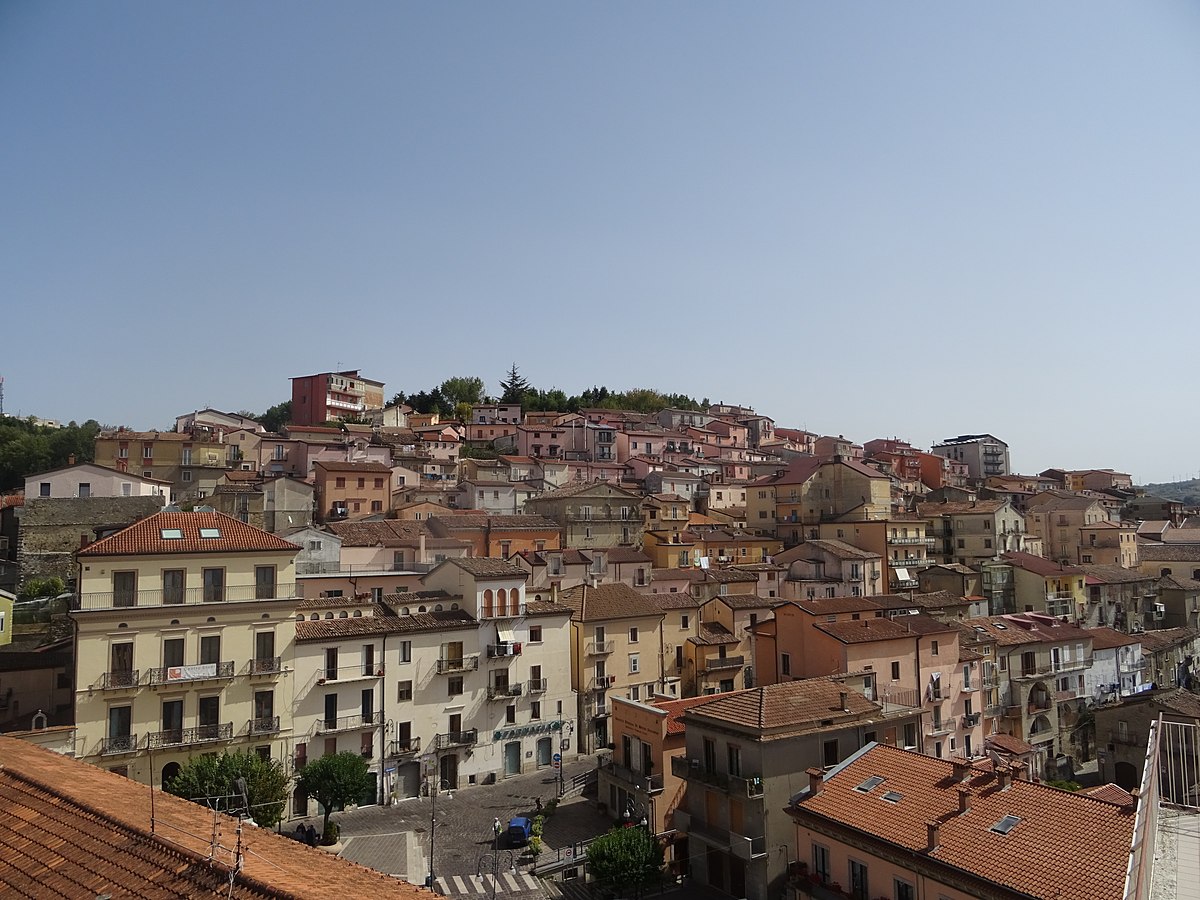
centro storico, montano, agricolo, Avigliano
In Avigliano, the vital heart is Piazza Emanuele Gianturco. From here, a ninth-century gateway called the Arco della Piazza leads into the historic centre, a dense weave of centuries. The main church of Santa Maria del Carmine rises in the oldest quarter, its first incarnation begun in the ninth century, though the present structure was only completed in 1854 after many rebuilds. Nearby, the seventeenth-century church of Santa Maria degli Angeli stands with its attached monastery of the Reformed Friars Minor.
The territory hints at Roman origins: a fundus Avillanus or Avilius may have existed here under Trajan, and two funerary inscriptions from the first or second century AD suggest the settlement took its name from the Villiana family. The first certain documentary evidence is from the twelfth century. During the Ghibelline uprising of 1268, exiles from Potenza and the Vitalba valley populated it. Charles I of Anjou granted it to various lords, and it later passed through the hands of the Caracciolo, Zunica, Raimo, Torella and Lof families.
Description via source. Coordinates and heritage data from the Atika atlas.