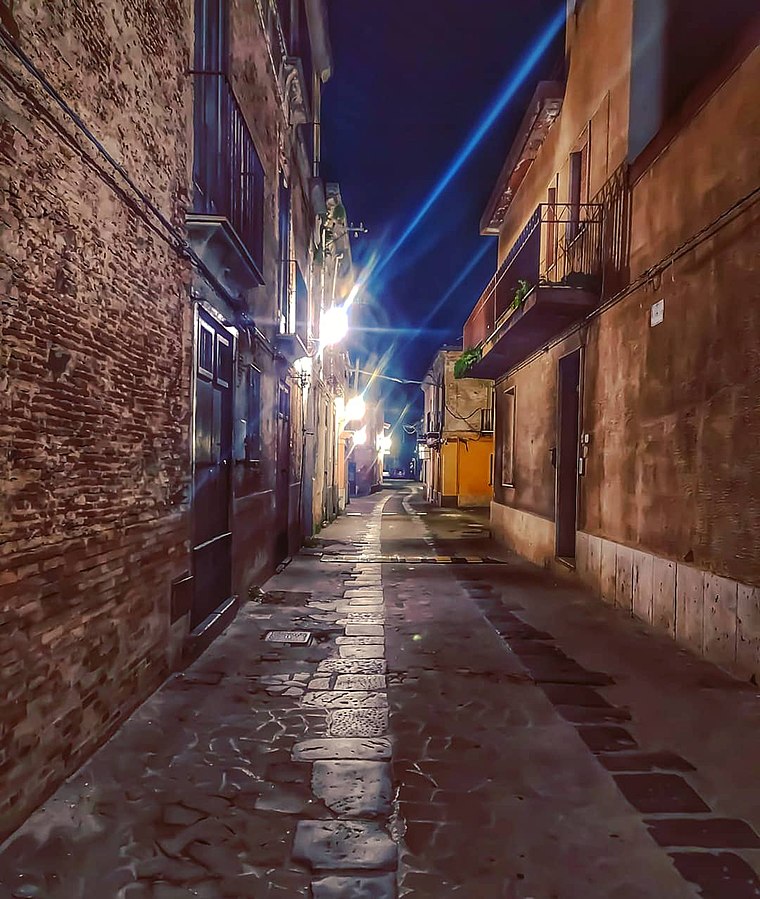
centro storico, di pianura, difensivo, Gioia Tauro, Geolia (denominazione storica, XVI sec.), Iolia (denominazione storica, XVII sec.), Giovia Iolia (denominazione storica, XVIII sec.), Joa (denominazione storica, XVIII sec., cit. 1737), Zoa (denominazione storica, XVIII sec., cit. 1737), Gioja (denominazione storica, cit. 1788
At the heart of Gioia Tauro, the old town perches on a rocky spur known as ‘il Piano delle Fosse’, the medieval core once girdled by walls. Those fortifications and their towers have long since been absorbed into later buildings, though the Torre Don Giacomo, on the western side, still retains its original character clearly. The borgo holds a few notable palazzi, Baldari, Sant’Ippolito, Fallara, and the church of Sant’Antonio.
The site has been inhabited since prehistory, if Neolithic finds are anything to go by, and is thought to occupy the ground of Metauros, a Locrian colony. That ancient association explains the ‘Tauro’ in its modern name, granted by royal decree in 1863. Earlier documents record the place as Joha, Zoa, Jovia, and other variations: in a 1271 register of Charles I of Anjou it appears as Johe, and later as a possession of Ruggiero di Lauria. The name-shifts and feudal transactions, through the Sanseverino, Caracciolo, and Correale families, among others, speak to a long, complex history layered beneath the quiet streets.
Description via source. Coordinates and heritage data from the Atika atlas.