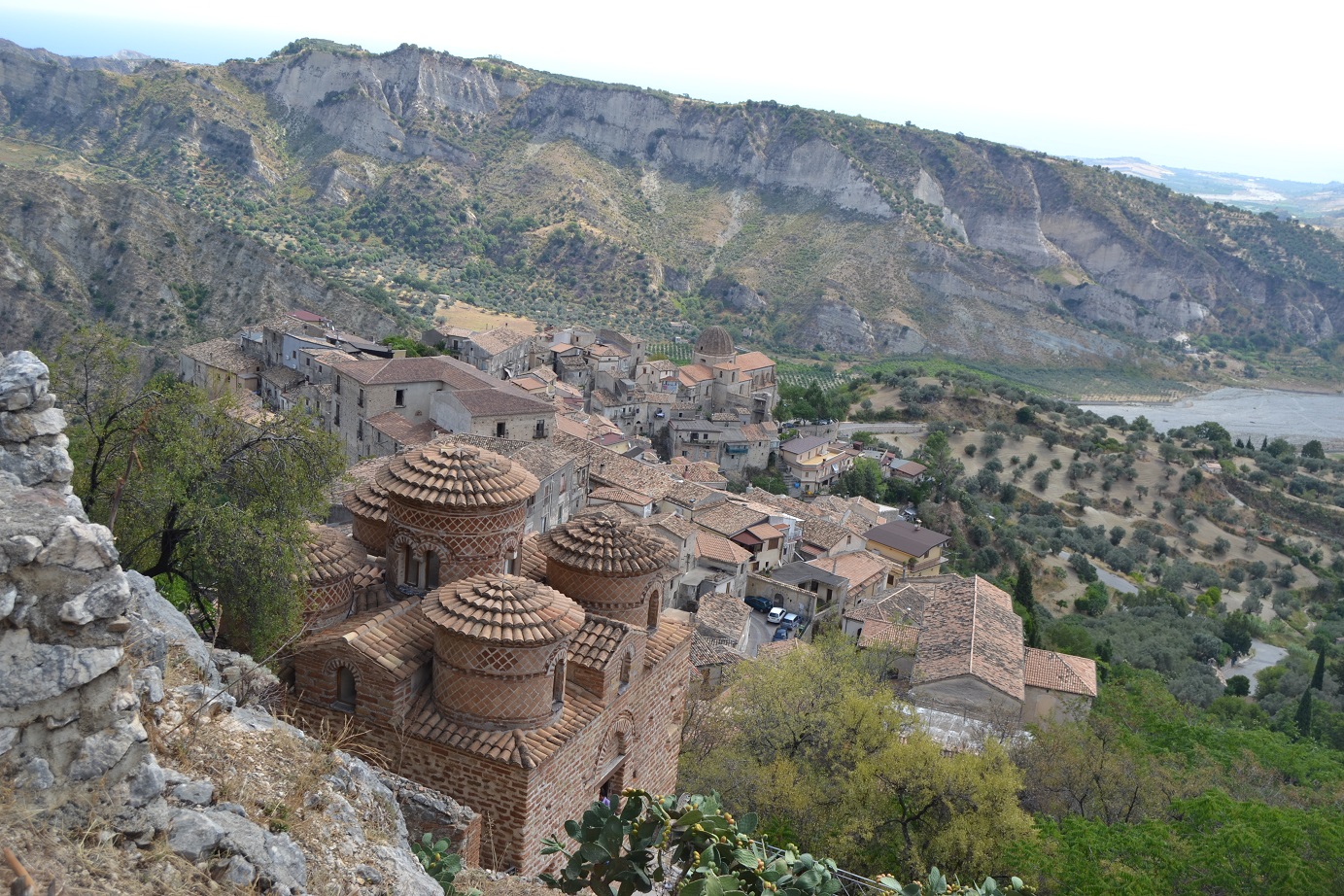
centro storico, di mezzacosta, costiero, difensivo, Stilo
The old centre of Stilo sprawls across the contours of Monte Consolino, whose bulk looms above it. This was once a walled town, its defences perhaps linked to a Norman-Swabian castle set apart from the core. Of the five original gates, just two remain; two watchtowers still stand, absorbed into the later fabric. The settlement divides into distinct neighbourhoods, Borgo, Valle, Menzalora, a medieval patchwork of narrow lanes lined with terraced houses and punctuated by a few aristocratic palazzi.
The most celebrated architectural survival here is the Cattolica, a square-plan Byzantine church on the mountainside, unique in its kind and still a subject of scholarly study. More broadly, the town’s religious buildings preserve rare traces of Byzantine and Gothic artistry. Stilo’s name may derive from stylo, meaning column, perhaps a reference to a milestone on the Ionian road. Founded, by Caulonia’s refugees fleeing Dionysius of Syracuse, or by seventh-century colonists escaping Saracen raids, its rocky, cave-riddled terrain offered familiar refuge to Orthodox monks in flight.
Description via source. Coordinates and heritage data from the Atika atlas.