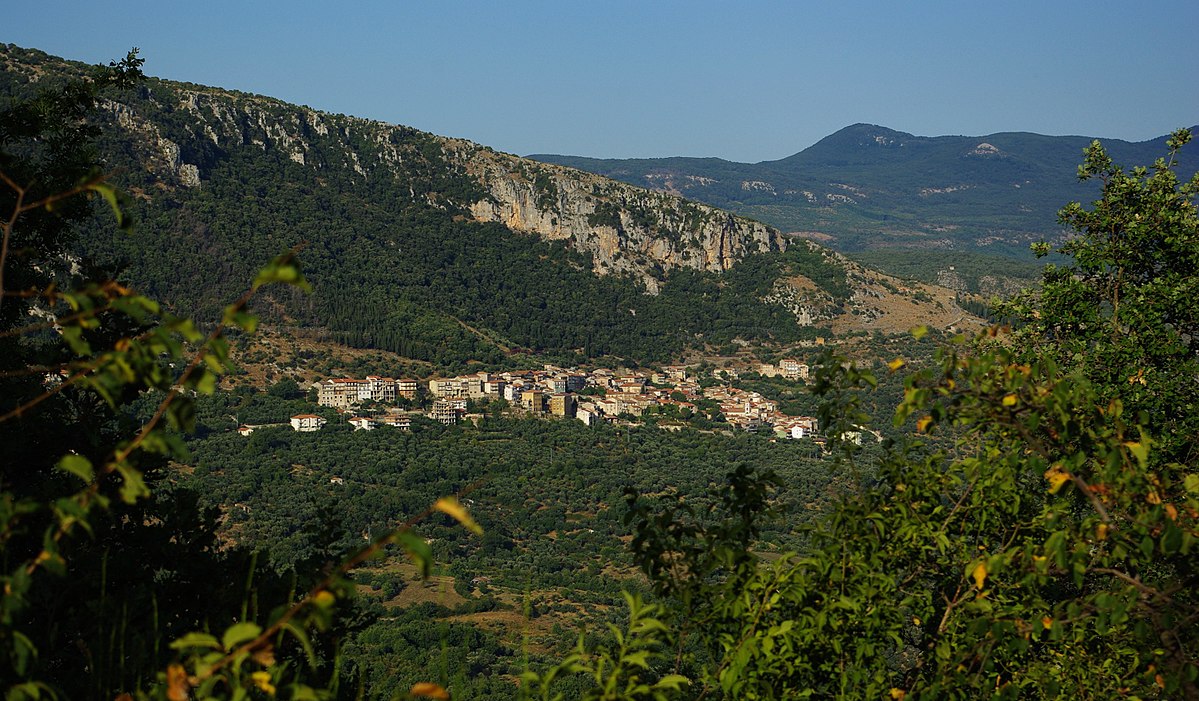
centro storico, di mezzacosta, collinare, lineare, Ottati
On a hillside in the Cilento, Ottati is a linear medieval borgo that clings to its slope with the patient logic of a settlement built before the motor car. The town unfolds orthogonally from its main road, using narrow strips of land to tame the natural incline; its historic core, largely intact from before 1870, is a quiet lesson in how a community once organised itself around a single, practical axis.
The Dominican cloister, late 1400s, and the Church of San Biagio, built between 1180 and 1230, anchor the medieval fabric. But the real surprise is how the old stone walls have become a canvas: eighty murals by artists from across Italy turn the streets into an open-air gallery. The origins of the settlement are shadowy, perhaps shepherds from Fasanella, perhaps Greek colonists from the lost Civita in the Alburni mountains. The name may come from a bishop, a hermit, or simply an ancient family name. Ottati keeps its secrets, and offers its walls instead.
Description via source. Coordinates and heritage data from the Atika atlas.