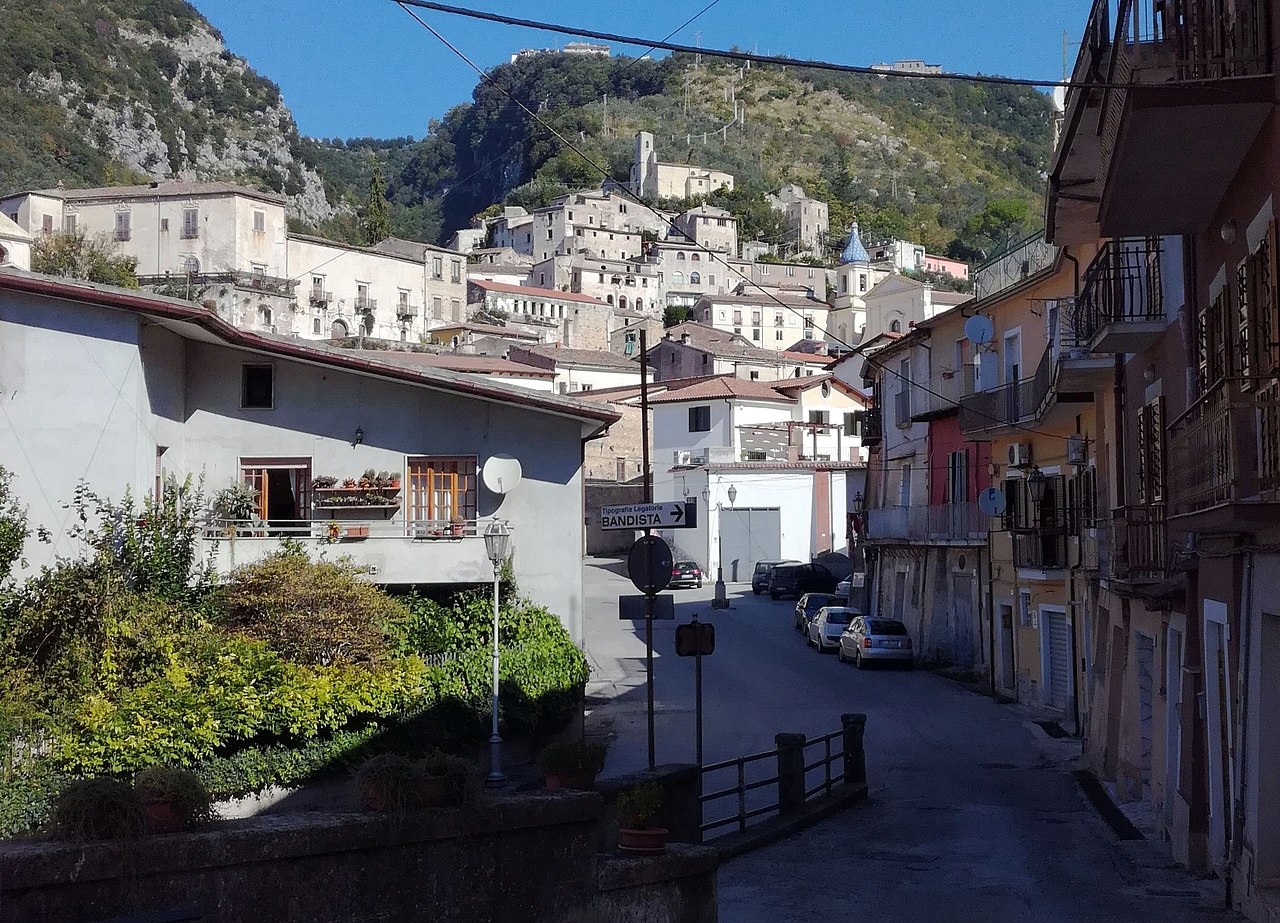
centro storico, di fondovalle, montano, Piedimonte Matese, Piedimonte d'Alife (denominazione storica, ante 1970), Piedimonte (denominazione storica, ante 1862)
Piedimonte Matese, known historically as Piedimonte d’Alife, occupies a strategic valley-floor position at the foot of the Matese massif. Though the settlement was founded in the ninth century by the Lombards, archaeological traces reach far deeper, into Neolithic, Samnite and Roman times. The town’s fabric, developed mostly in the late Middle Ages, retains a pleasing coherence: even later Baroque additions sit decorously within the older layout.
The ducal palace stands on the site of the medieval castle, given its present eighteenth-century aspect by the Gaetani family, who held the town from 1383 until the abolition of feudalism in 1806. Several churches merit attention: San Tommaso d’Aquino, built in the late fourteenth century on a Roman temple; San Salvatore, which holds a rare thirteenth-century sculpture of the Madonna della Neve; the eighteenth-century basilica of Santa Maria Maggiore; San Biagio, with its fifteenth-century frescoes; and the seventeenth-century Santissima Annunziata. Beyond the town lie the sanctuary of Santa Maria Occorrevole and the Eremo della Solitudine.
Description via source. Coordinates and heritage data from the Atika atlas.