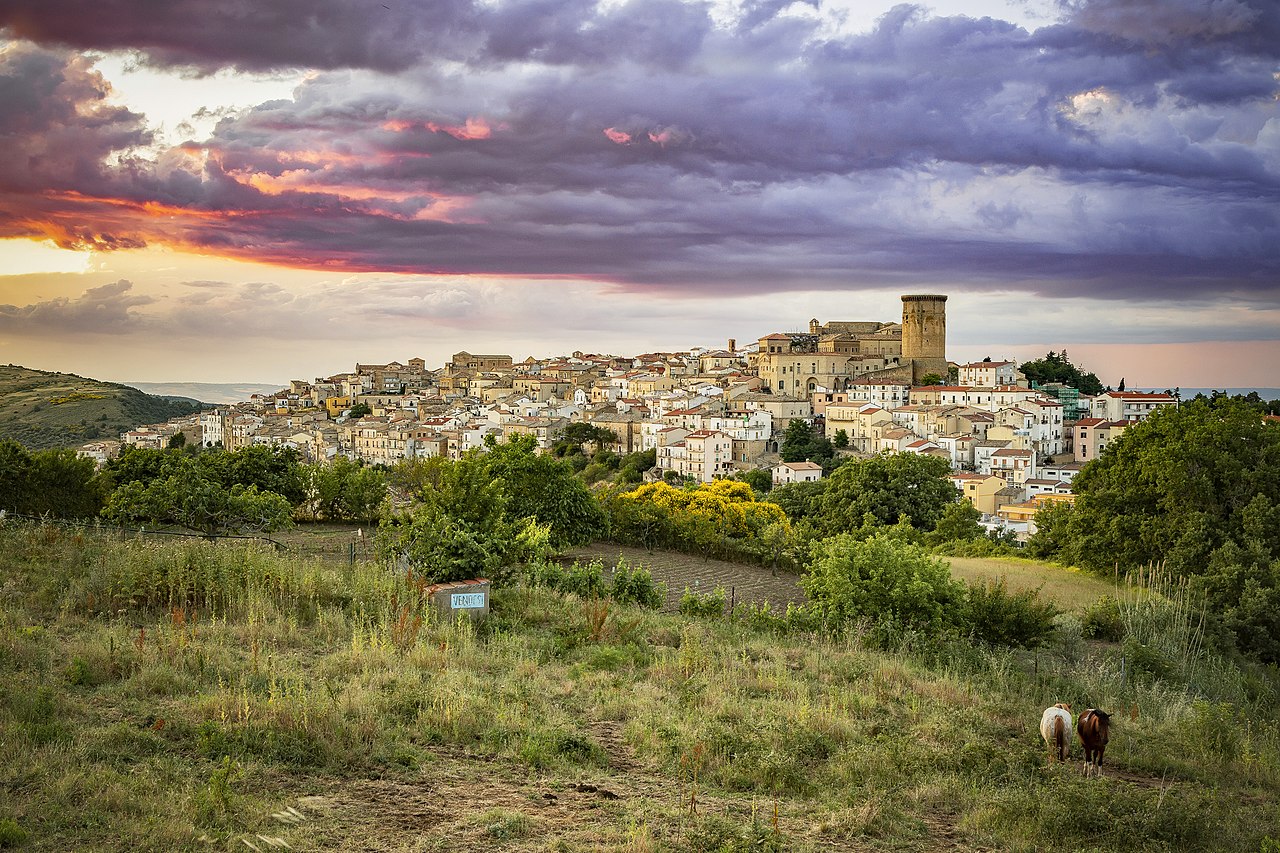
centro storico, di crinale, lineare, difensivo, Tricarico
In Tricarico, the historic centre declares its origins plainly in the urban layout. The Rabata quarter, of Islamic derivation, is a dense tangle: narrow main streets sprouting even tighter alleys that weave into blind courtyards. The housing is modest, often just one or two rooms. Later, below the Norman tower, the medieval borgo takes a different form, parallel streets at varying heights, linked by perpendicular lanes. Here, the architecture of power is assertive: feudal and ecclesiastical. The Ducal Palace, the Norman tower with its slits, and multiple gates (Porta Saracena, Porta della Rabata, and others) reinforce a defensive character. Religious foundations multiply: convents of Sant’Antonio, the Cappuccini, and Carmine join older ones; churches rise, Santa Maria dell’Ulivo, San Michele, Santa Lucia, many now absorbed into later housing, their traces lost. Between the sixteenth and seventeenth centuries, noble palazzi were inserted into the fabric. Tricarico is a layered document of conquest, faith, and everyday life, written in stone and alleyway.
Description via source. Coordinates and heritage data from the Atika atlas.