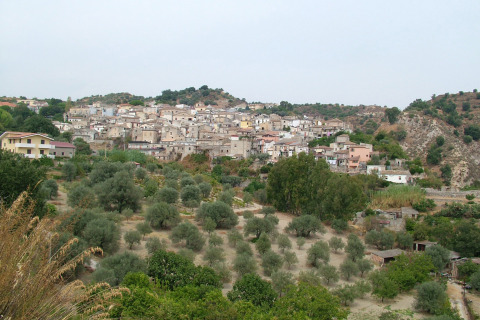
centro storico, di crinale, costiero, radiale, Riace, Reatinum (denominazione storica), Reatino (denominazione storica), Reace (denominazione storica), Ryaki (denominazione originaria)
This small hilltop settlement preserves a medieval street plan of narrow lanes and cobbled alleys opening onto tiny squares. The ordinary masonry buildings, constructed using ancient techniques, are distinguished by imposing stone doorways carved with apotropaic masks, a folk tradition intended to ward off evil. These portals, together with the fortified gates and encircling walls, formed the town’s defensive system.
The settlement is thought to have originated as a Byzantine Basilian centre in the 9th, 10th centuries, growing in importance as people fled the malarial coast and Saracen raids. Within its walls, built on precipitous cliffs, no fewer than five churches were incorporated into the defences. From around the 11th century, it became a hamlet of Stilo, remaining in royal demesne thanks to rich iron and silver mines that continued to be worked into the Aragonese period. The devastating Calabrian earthquake of 1783 caused severe damage, but the medieval core’s ancient fabric endures.
Description via source. Coordinates and heritage data from the Atika atlas.