centro storico, di crinale, costiero, concentrico, Motta San Giovanni, Mocta Sancte Joannis (denominazione storica), San Giovanni (denominazione storica)
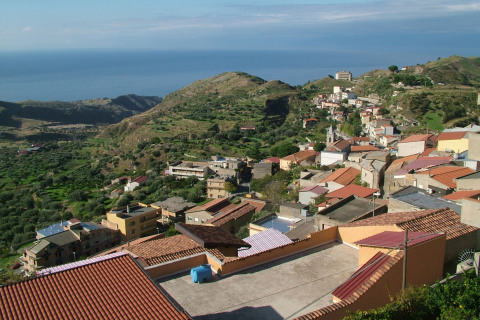
The centro storico of Motta San Giovanni is a study in geological and historical layering. Its urban fabric, dictated by the steep orography, divides into two distinct nuclei: the medieval Quartiere Suso, clustered around the castle, and the later 18th- and 19th-century Quartiere Praci to the east, now linked by modern infill. The older part was a classic fortified medieval borgo, its walls once enclosing the gateway and its plan dictated by military necessity. Though the ramparts and many palazzi are long gone, the concentric rings of buildings that followed the bastions’ curve remain legible, a ghost of defence etched into the street pattern.
The settlement’s origins are undocumented, but it likely existed as a village called San Giovanni before the Angevin arrival. The new rulers dubbed it “Motta”, a term for a hilltop fortified site, reflecting its position atop a ridge. A decree of 1412 from Ladislao of Durazzo confirms the name. Today, narrow lanes and ordinary masonry houses with tiled roofs preserve the medieval layout, a quiet palimpsest of power and topography.
Description via source. Coordinates and heritage data from the Atika atlas.