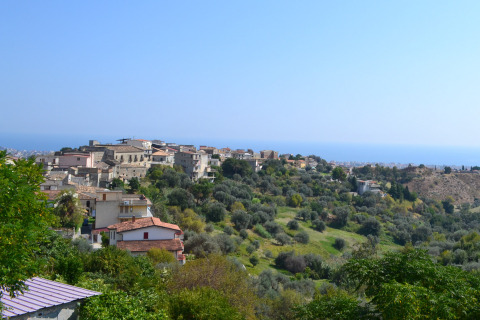
centro storico, di crinale, collinare, spontaneo, Siderno Superiore, Sideros/ Sideronis (denominazione storica, VIII-VI a.C.), Motta Sideronis (denominazione storica, XIV secolo), Siderone (denominazione storica, XVI secolo), Siderno (denominazione storica, cit. 1788)
On a hill above the Ionian coast, Siderno Superiore is a spontaneous borgo, its medieval layout shaped by the ridge it occupies. The settlement’s roots reach back to the Greek colonies of the 7th, 6th centuries BC, and its name, recorded as Motta Sideronis in a 14th-century document, hints at a fortified past. After Locri was destroyed by Saracens in the 10th century, this site grew, eventually becoming a casale of Grotteria and later a feudal holding under various noble families, including the Carafa dynasty, who oversaw notable economic and demographic expansion.
The historic core is a quiet catalog of aristocratic and religious architecture: the late-16th-century Chiesa di San Carlo Borromeo; the 17th-century Cappella del Carmine, once a private Falletti family chapel; and several palazzi, De Mojà, Falletti, Correale-Santacroce, Calautti, Englen, and Audino, spanning the 17th to 19th centuries. Casa Amato retains a nucleus from the late 1500s. The stone streets and weathered facades tell a layered story of Greek, Byzantine, and feudal Calabria.
Description via source. Coordinates and heritage data from the Atika atlas.