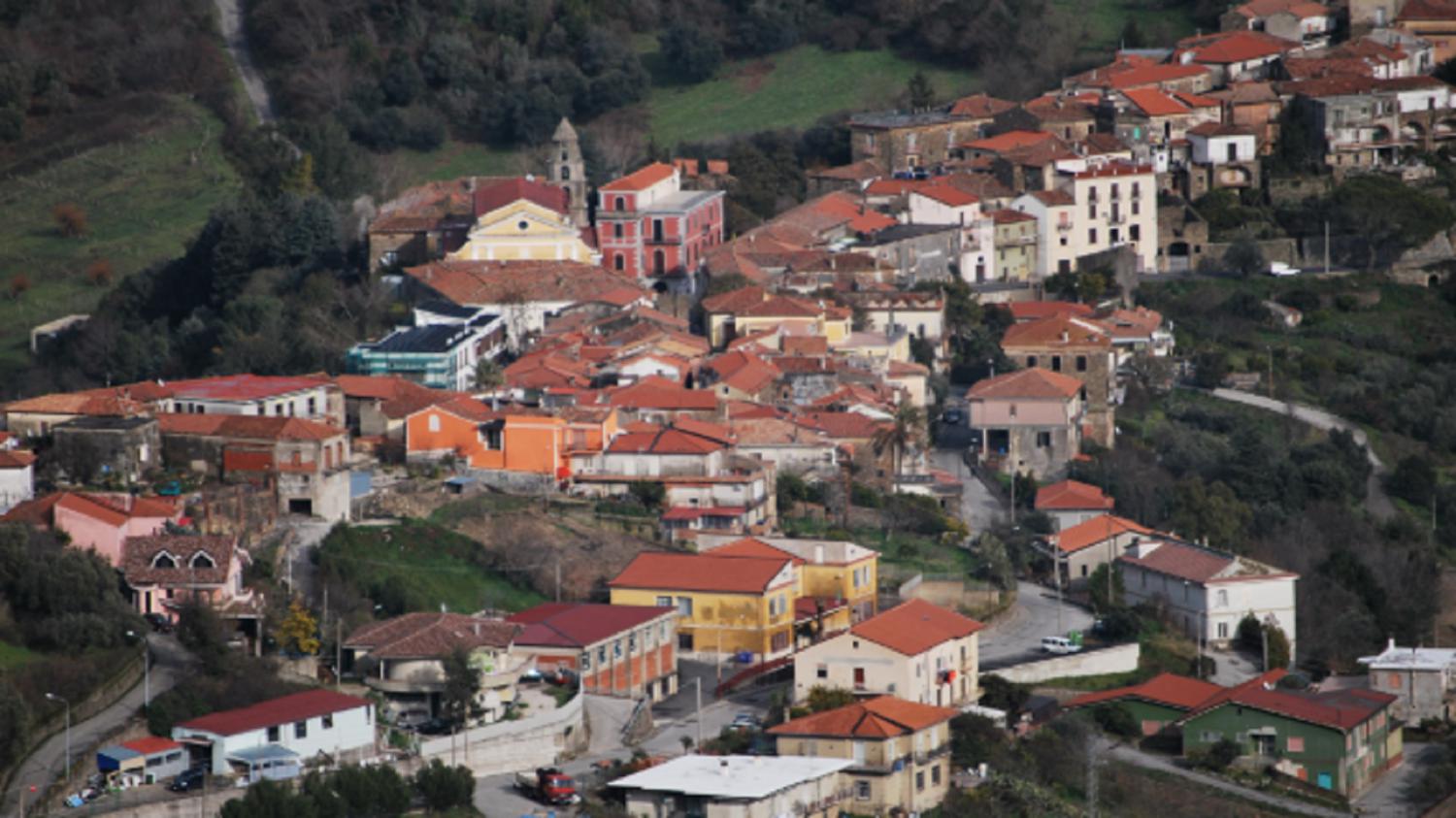
centro storico, di crinale, collinare, lineare, agricolo, Rutino, Ruticinum (denominazione storica), Rutigino (denominazione storica), Ruticíno (denominazione storica), Rodìno (denominazione storica), Rotino (denominazione storica, 1811-1860)
Rutino’s historic centre drapes along the old Tirrena state road, its linear shape dictated by that ancient artery. This is a borgo of the Cilento, a hilltop settlement that existed by the 11th century as a casale within the local barony; the first certain mention appears in a land sale of February 1053. The place has known several names over the centuries, Ruticinum, Rutigino, Rodìno, Rotino, each a faint echo of its long, layered past. Its feudal lords included the Sanseverino, the De Rogerio, and the Garofalo, who held it as dukes from the 1660s until 1806, when it became an autonomous comune.
The built fabric is typically medieval: a string of palazzi, Lombardi, Magnoni, Miglino, Cuoco with its dovecote opposite, and the church of San Michele Arcangelo. The architecture speaks of a time when a single road was enough to hold a community together, and power was measured in stone and title.
Description via source. Coordinates and heritage data from the Atika atlas.