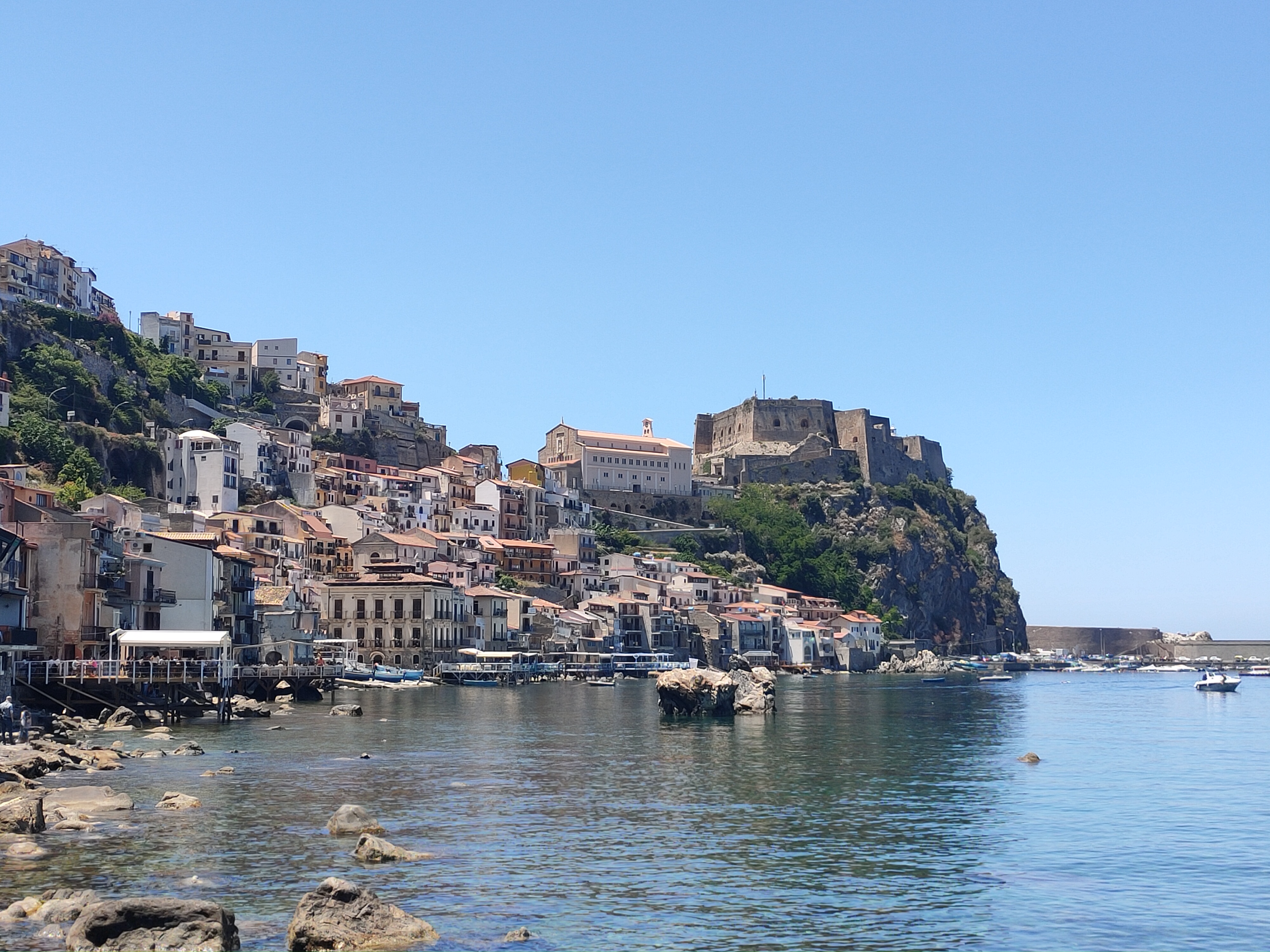
centro storico, costiero, di mezzacosta, difensivo, Scilla, Scyllaeum (denominazione storica)
The old centre of Scilla, ancient Scyllaeum, is a coastal borgo that climbs the hillside in three distinct parts: the quarters of San Giorgio, Spirito Santo, and Chianalea. San Giorgio was the domain of farmers, its terraced houses set transversely to the main axes of Corso Umberto and Via Raffele Piria, rebuilt after the 1783 earthquake. The eastern side of Corso Umberto II is the oldest part of this once defensive peasant village.
Spirito Santo, also called Marina Grande, shows its age less kindly: many buildings stand empty, a legacy of declining trade. The predominant typology here is the nineteenth-century palazzotto, stone and brick beneath tiled roofs.
Chianalea was the mariners’ quarter, and it tells a different story. Its structures are the oldest and best-built, many having survived the 1783 earthquake, a testament to former prosperity. Yet even here, later reconstructions have partly distorted the original urban fabric. The whole settlement, as Strabo noted, was founded in response to Tyrrhenian pirates preying on commerce.
Description via source. Coordinates and heritage data from the Atika atlas.