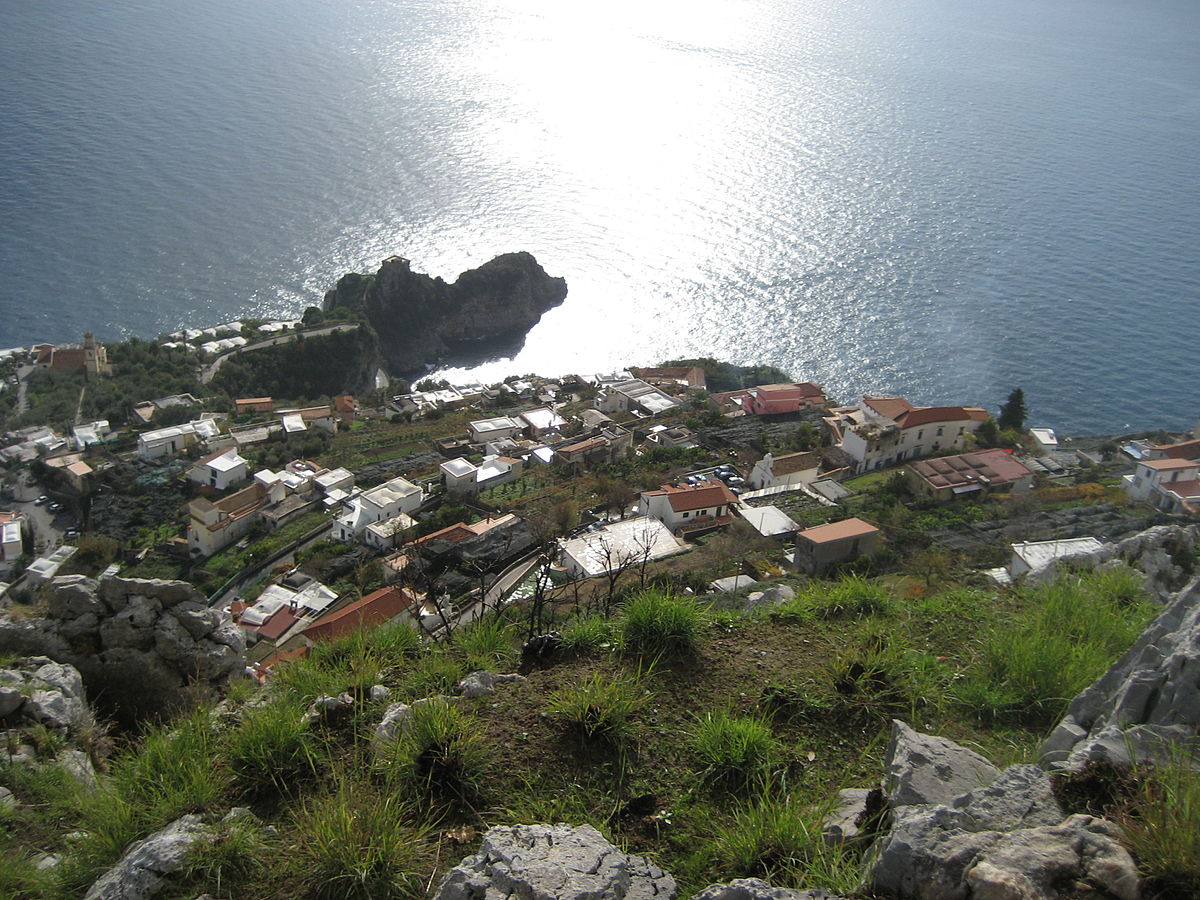
centro storico, costiero, commerciale, Conca dei Marini, Cossa (denominazione originaria), Conca (denominazione storica, fino al 1863)
Conca dei Marini’s historic core, like others along the Amalfi Coast, keeps its distance from the sea. This was prudence, not petulance: pirate raids were a perennial threat, spotted from watchtowers on rocky spurs long before they could land. The result is a small, steeply-set borgo with an improbable six churches, San Giovanni Battista, San Pancrazio, Santa Maria di Grado, San Michele Arcangelo, and the chapel of the Madonna della Neve, all perched on panoramic points.
The town’s origins are hazy. It may have been founded by the Tyrrhenians as Cossa, its name changed to Conca only in 1863. Given the rugged, irregular hinterland, the first inhabitants turned to the sea. Conquered by Rome in 272 BC and made a colony, it already had a vigorous merchant fleet, trading across the Mediterranean. This maritime prosperity lasted centuries, running parallel to the fortunes of the nearby maritime republic of Amalfi. A tenth-century cataclysm destroyed much of the town; in 1543, Turkish invaders sacked it. The churches remain, looking out to the horizon that once brought both danger and wealth.
Description via source. Coordinates and heritage data from the Atika atlas.