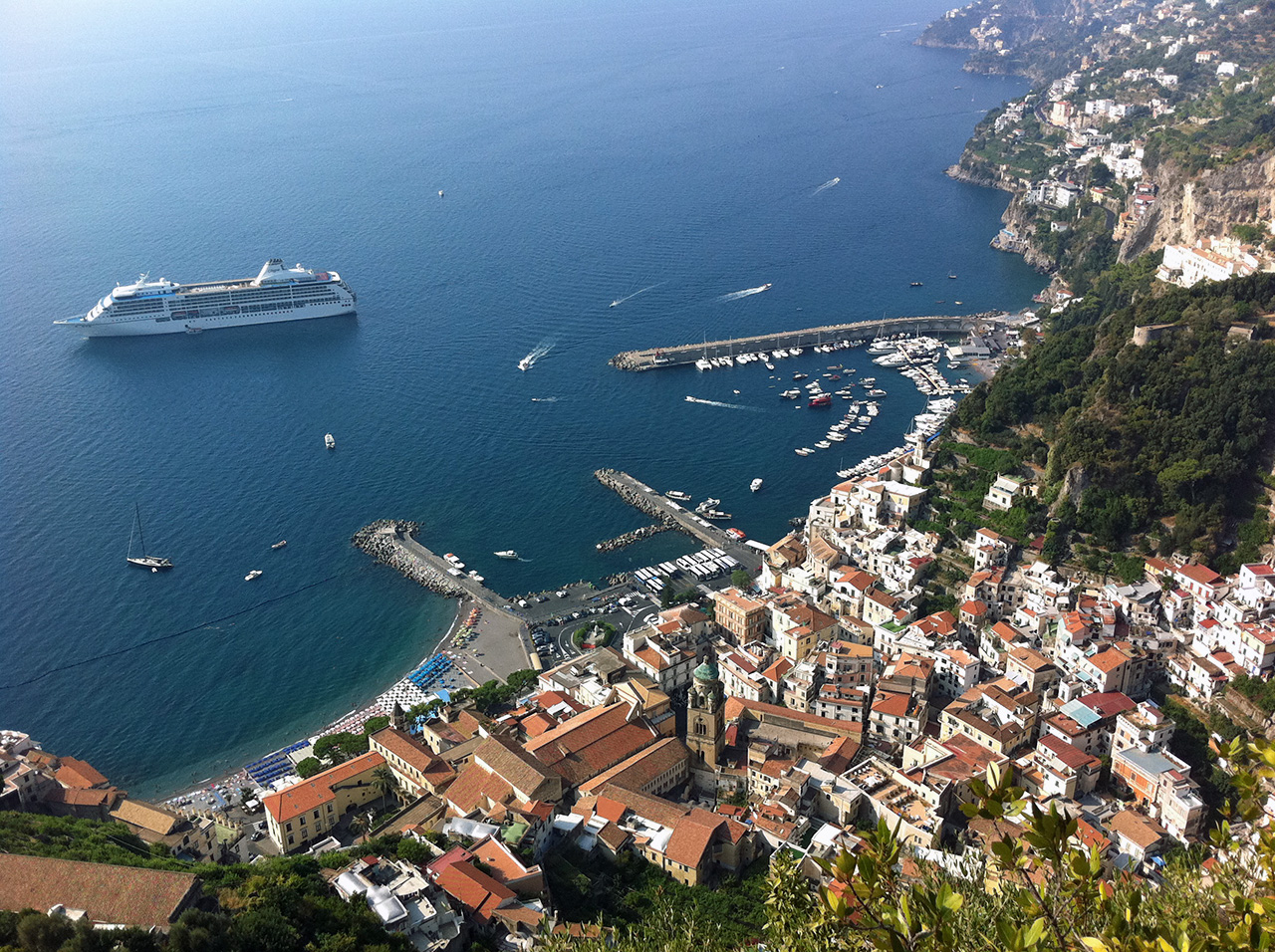
centro storico, costiero, commerciale, Amalfi
The historic centre of Amalfi is the medieval city, its white houses and steep, narrow lanes, many of them stepped, a classic example of Mediterranean coastal architecture. A patient eye can read the centuries in the accretions and overlays of its building fabric. Dominating the town is the cathedral of Sant’Andrea, first built in the ninth century, remodelled in Arab-Norman style around 1203, and much altered since. Its adjacent campanile and the Chiostro del Paradiso date from the twelfth and thirteenth centuries. The maritime republic’s seafaring past is tangible in the surviving arsenal, now housing a museum, and in the legacy of the Tabula de Amalpha, a celebrated code of sea law, and the tradition that the compass was invented here. Amalfi’s name is probably Latin, perhaps from a Roman family or from a Lucanian village. Founded by Romans in the fourth century, it was a Byzantine bishopric and fortress before becoming a free commune and, for a time, the foremost of the Italian maritime republics.
Description via source. Coordinates and heritage data from the Atika atlas.