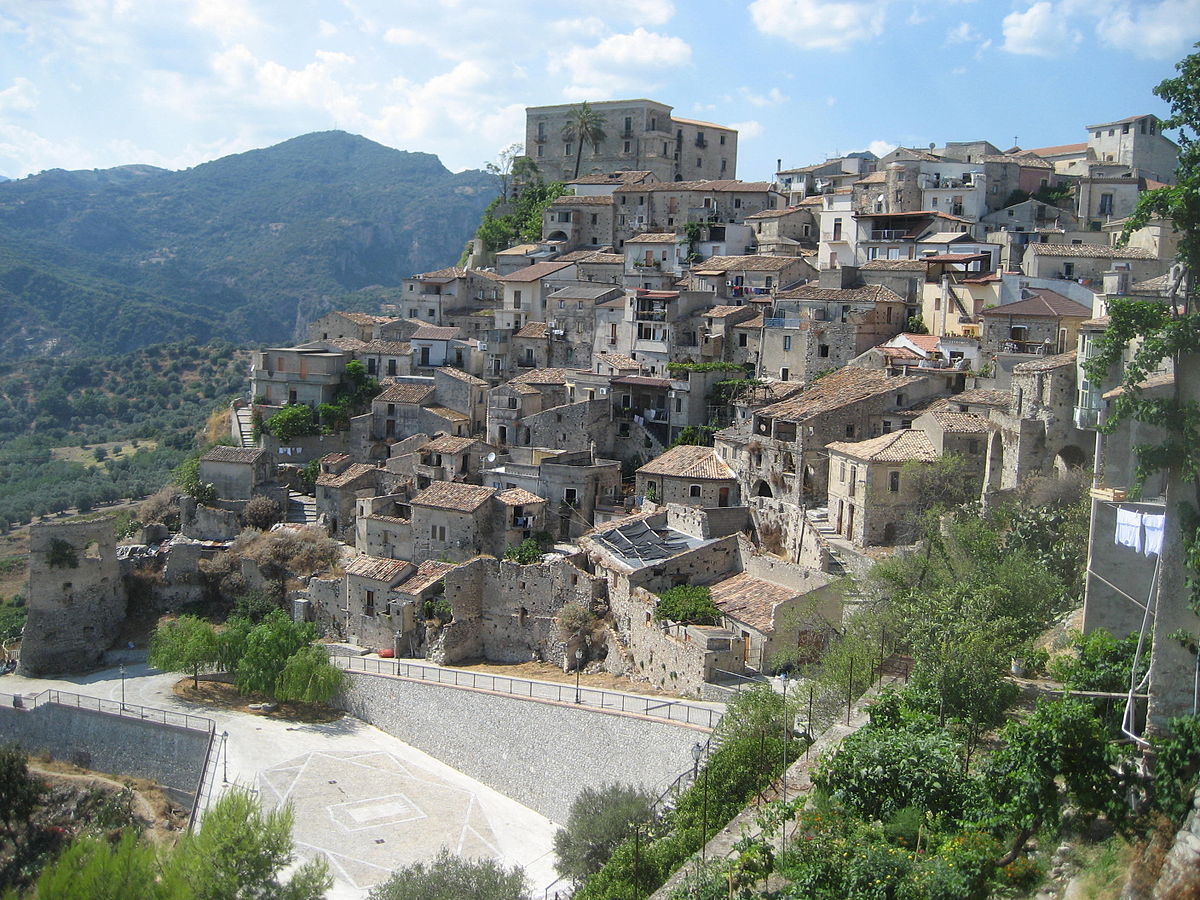
centro storico, collinare, lineare, spontaneo, Placanica, Paganica (denominazione storica), Mocta Paganica (denominazione storica), Lakònika (denominazione idiomatica, dialetto greco-calabro), Παγκανικ (denominazione greca)
The medieval street plan of this hilltop borgo remains perfectly legible, a spindle-shaped layout dominated by the feudal lord’s old residence and the mother church. Convents are numerous, and the original settlement was walled. Its core arose around the eleventh century, near a Basilian monastery, as a refuge from Saracen raids. But the area was inhabited far earlier: a necropolis at Titi testifies to that.
The name, once recorded as Motta Paganica and Motta Placanica, likely derives from the Greek plàca, meaning ‘flat stone’. The first feudal lords were the Arcadi; ownership later passed through several families, including the Caracciolo, Licandro, Aragona, Passarelli, and Musitano, until the fief went to the Clemente in 1806. The 1783 earthquake caused heavy damage. The Greek-Calabrian dialect still preserves the old name Lakònika, a quiet echo of Magna Graecia in this linear, spontaneous hill town.
Description via source. Coordinates and heritage data from the Atika atlas.