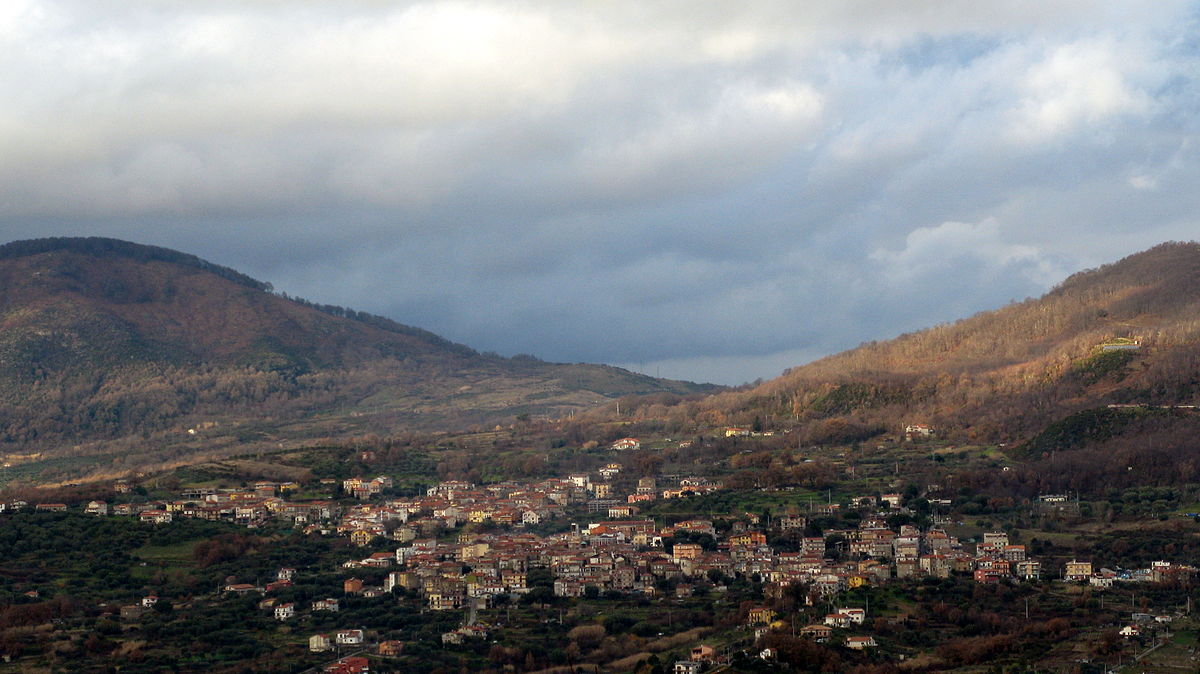
centro storico, collinare, difensivo, Moio della Civitella, Mojo (denominazione storica), Moyo (denominazione storica), Moyo Troyano (denominazione storica), Muoio (denominazione dialettale)
On a steep hillside in the Cilento interior, Moio della Civitella is a Norman-era borgo that still wears its medieval defensiveness with quiet pride. Its name, variously Mojo, Moyo, Muoio, hints at a long, layered history, but the village’s character is shaped by its role as an agricultural centre. The Museo della Civiltà Contadina, housed in the 19th-century Palazzo Merola, tells that story of rural life. Other civic buildings, Palazzo D’Agosto, Palazzo Lanzulli, and an adjacent tower, stand as stone witnesses to a time when this hilltop settlement controlled the surrounding valley.
The parish church of Santa Veneranda, first recorded in 1604 but certainly older (15th, 16th century), perches on a rocky spur beside what was once a generous public square. In the 18th century, that square was partly absorbed by the extension of Palazzo Alario, whose original square tower was joined by an orthogonal wing and a neat polygonal turret, creating an enclosed courtyard. The bell tower was added only in 1813. The result is an accidental, pleasingly compressed urban space, a village that grew by accretion and adaptation, not by plan.
Description via source. Coordinates and heritage data from the Atika atlas.