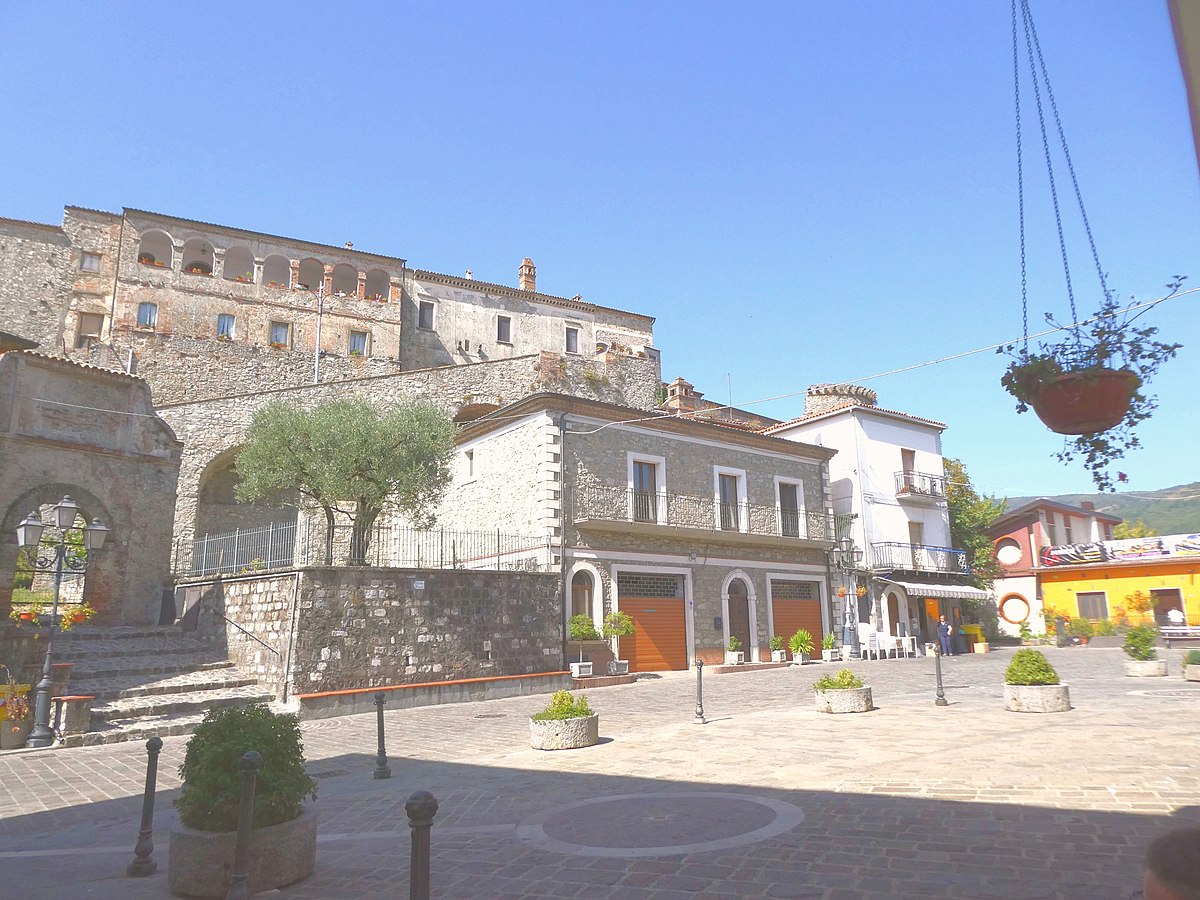
centro storico, collinare, difensivo, Episcopia
A small hill town whose name, for some scholars, derives from the Greek for ‘watchtower’, an apt description, given its elevated, defensive position. The silhouette is dominated by a castle, its two opposing towers, one cylindrical, one square, immediately apparent. The original structure likely dates from the Lombard period, was enlarged under the Swabians, and later remodelled by the Angevins. The town itself grew up around this fortress. Founded in the medieval era by Basilian monks, the site was inhabited far earlier: archaeological finds here testify to contact between indigenous Enotri, Greeks and Etruscans from the seventh century BC. Wandering the main axis, one passes the palazzi of notable families, among them Fabrilis, Guerriero (the oldest, late eighteenth-century), Targiani, Astore and others. Also of note: the sixteenth-century Chiesa Madre di San Nicola di Bari, and the church and convent of Sant’Antonio.
Description via source. Coordinates and heritage data from the Atika atlas.