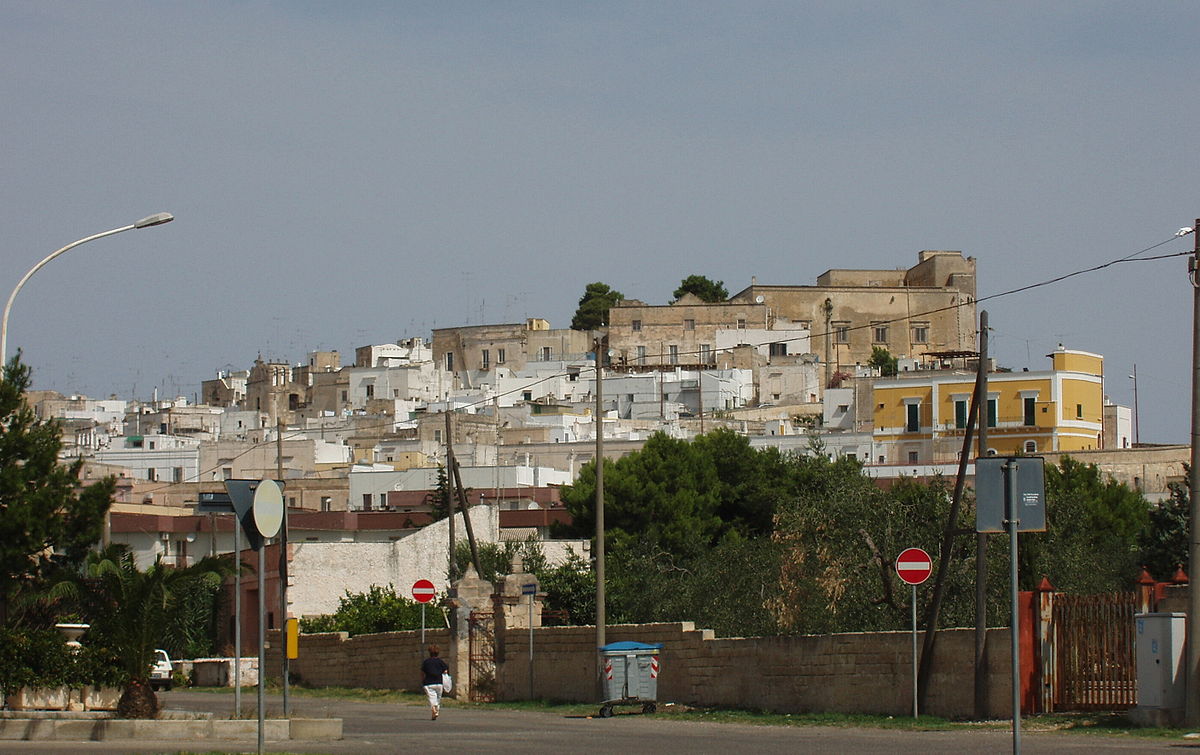
centro storico, collinare, difensivo, Castellaneta, Castanetum (denominazioni storica, alto medioevo), Castanea (denominazioni storica, alto medioevo), Castellanetum (denominazioni storica, alto medioevo)
Castellaneta’s historic centre is a medieval warren of tight, irregular lanes, shaped less by design than by the stubborn geology of the gravina, a deep ravine that has checked the town’s eastward spread since antiquity. Its street plan, Byzantine in origin, still bears the mark of that defensive logic: narrow, crooked, protective. What survives today, however, is largely an eighteenth-century city, its finest architectural treasures Baroque in spirit. Feudal lords came and went, leaving behind noble palazzi now absorbed into the modern fabric; churches are numerous, a reminder that this was for centuries a diocesan seat. Above it all rises the cathedral, an eighteenth-century remake of a thirteenth-century original. The basic dwelling type was the farmer’s house: a single square room, sometimes divided by a wooden partition, its façade punctured by a small door and one window. The town’s origins are said to lie in the tenth century, when peasants took refuge from pirates in the local caves.
Description via source. Coordinates and heritage data from the Atika atlas.