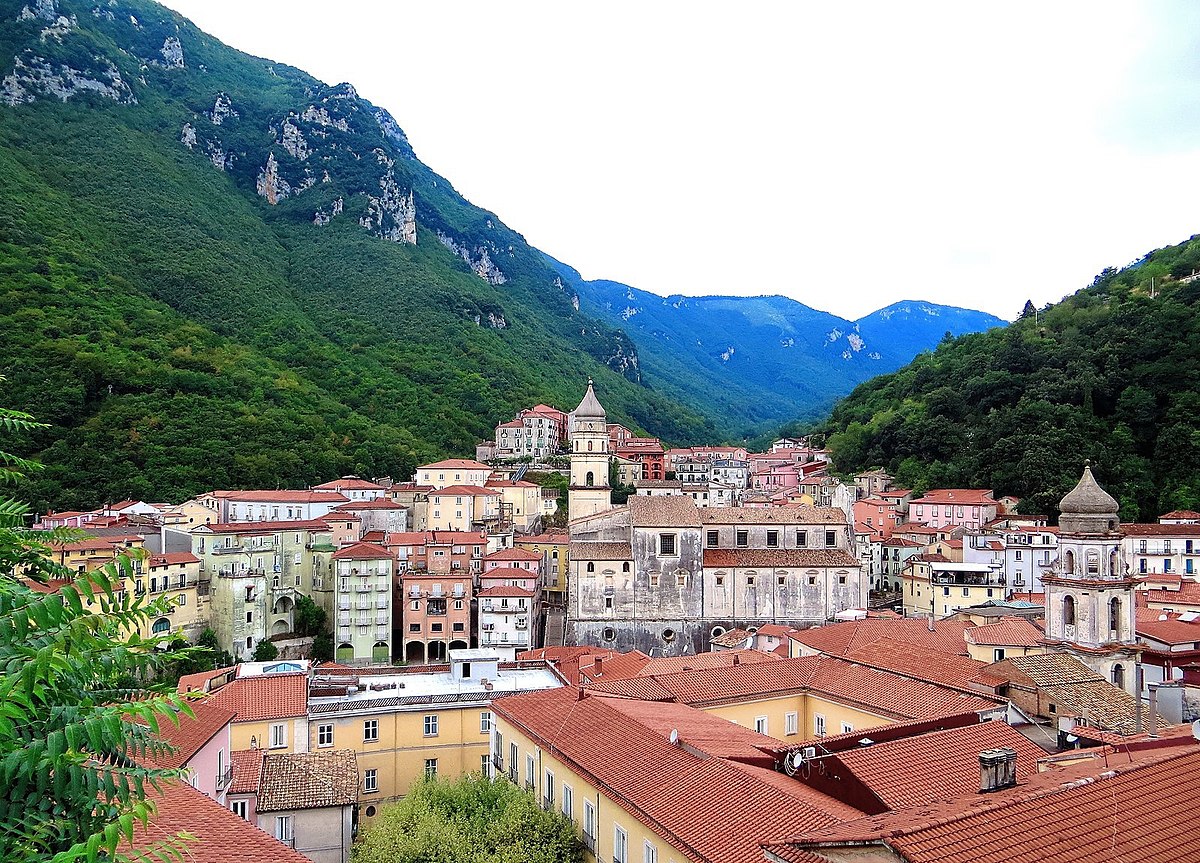
centro storico, collinare, Campagna
This hilltop centre in Campagna, of ancient origin, is dominated by the skeletal remains of Castello Girone. Its history, however, has been violently rewritten. The post-1980 Irpinia earthquake reconstruction dramatically altered both the old building fabric and the street plan, sweeping away several historic palazzi and reshaping the routes that once linked the Giudecca to the main squares. The result is a town where the medieval and modern sit in uneasy, fascinating tension.
The religious architecture tells a story of centuries: an 11th-century church, a 14th-century Dominican convent, a 16th-century church, and an 18th-century bishop’s palace. The civic buildings are equally layered, from a 13th-century town hall to a 17th-century ducal palace and a 16th-century Palazzo dei Governatori, once used by the Princes of Monaco. Local historians trace human settlement here back to the Middle Bronze Age, with evidence in a nearby ossiferous cave and on Monte Polveracchio. Before the Romans called it Campania vetus, these hills already held their own deep, quiet history.
Description via source. Coordinates and heritage data from the Atika atlas.