Stomiokastro
Stomiokastro is a Frankish-era enigma, a castle of unknown origin perched above the dramatic gorge and falls of the River Neda in the southwestern Peloponnese. Nothing is documented of its history, and its construction date is a matter of conjecture. The first to suggest a Frankish builder was the traveller Pouqueville in the 1820s, and later researchers have not disputed the idea, though no systematic study has ever confirmed it.
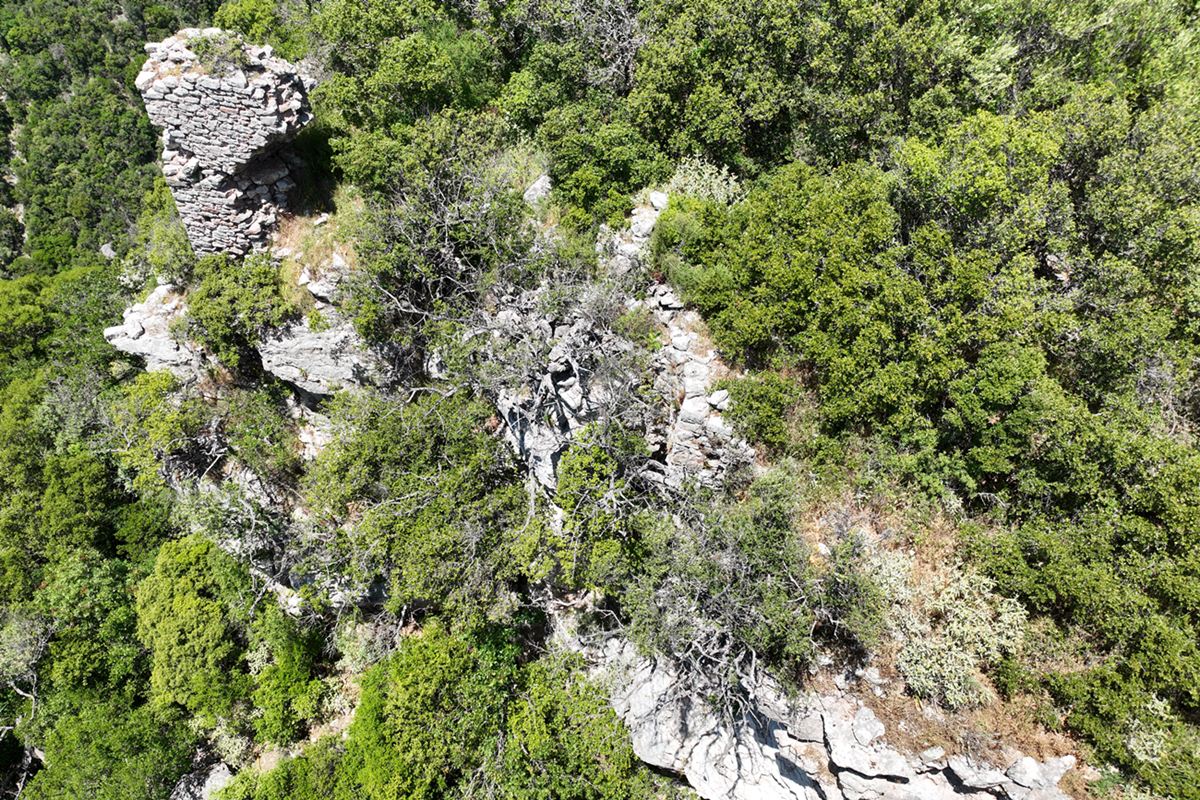
The castle crowns a triangular hill with almost vertical slopes, save for a gentler southern side where a terrace called Kastraki once held a small medieval settlement. The river wraps around the western and eastern flanks, and the northern tip narrows to a sharp peak above the waterfall. Covering roughly 18,000 square metres within a perimeter of about 600 metres, it relies heavily on natural defences. A ruined tower, standing to about three metres, marks the southwest corner, and a stone structure at the southeastern edge likely guarded the only accessible gate. Ruins of at least twenty dwellings survive, along with foundations of a possible two-aisled church below the southern rocks. The chapel of Panagia stands at the hill's foot, facing the falls, and may have served the castle's inhabitants.
- Kastra.eu, Castles of Greece · reference
Coordinates and heritage data compiled in the Atika atlas.