Q138647382
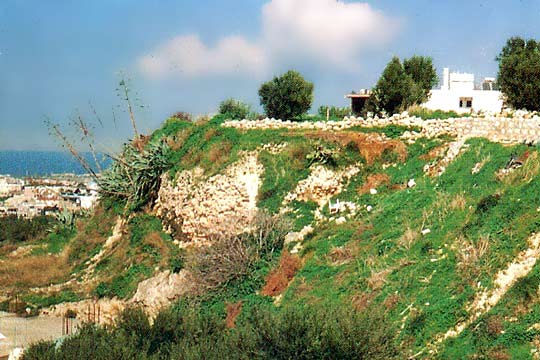
The Ottomans raised this fort in 1650 as a winter quarters for troops besieging Candia, the Venetian capital of Crete, during what became the longest siege in world history, lasting from 1648 to 1669. They called it Kal’a-ı Cedid, the new fortress, but it soon earned the name Inadiye, from the Turkish for obstinacy, reflecting the besiegers’ stubbornness. The Venetians, with a spy’s detailed plan now kept in Venice, knew it as Fortezza Città del Turco, or mockingly Nuova Candia. Built of stone and earth in a pentagonal shape with four gates, it held five hundred houses, an armoury, stores, cisterns and three fountains, plus six places of worship, including the domed mosque of Sultan Ibrahim, used as a powder magazine without a minaret to avoid artillery fire. A vast wooden suburb grew alongside, with thousands of homes and workshops. In 1667 the Grand Vizier Köprülü Fazıl Ahmed Pasha, preparing the final assault, ordered this suburb demolished for timber. After Candia fell in 1669, the fort declined, was used occasionally as a camp, and by the nineteenth century lay ruined. Few remains survive.
- Chronique des fouilles en ligne · excavation
Coordinates and heritage data compiled in the Atika atlas.