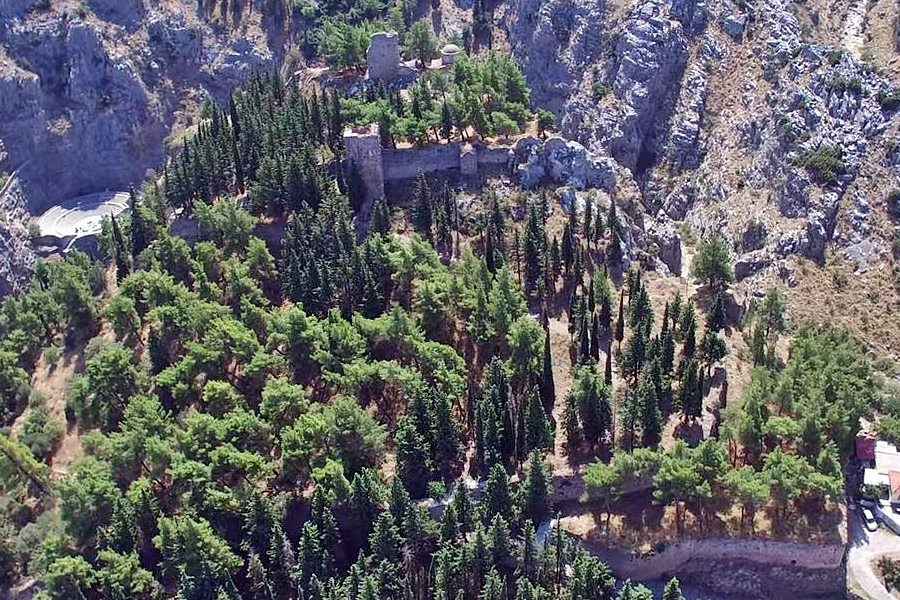
Livadia
The castle of Livadia occupies a rocky hill above the gorge of the river Erkyna, a site fortified since at least the fifth century BC, when the region was known for the oracle of Trofonion. The Byzantines and Franks repaired the defences, but the present form dates from after 1311, when the Catalan Company took the city without a fight, the gates having been opened by inhabitants who secured rights to keep their Orthodox faith and be governed by the customs of Barcelona. Livadia became the most Catalan city in central Greece until 1380, when the Navarrese Company besieged it; the castle fell only after betrayal by a Greek official, Rotarios Gaskos. The Catalans departed, and the city passed through Acciaioli dukes and Ottoman occupations, finally surrendering to Mehmet II in 1460. The triangular fortress, about 20,000 square metres, retains its outer northern and eastern walls to ten metres, a citadel wall, and a massive riverside tower, twelve metres high, which guarded the water supply and the gorge entrance.
- Kastra.eu, Castles of Greece · reference
Coordinates and heritage data compiled in the Atika atlas.