Kleitor
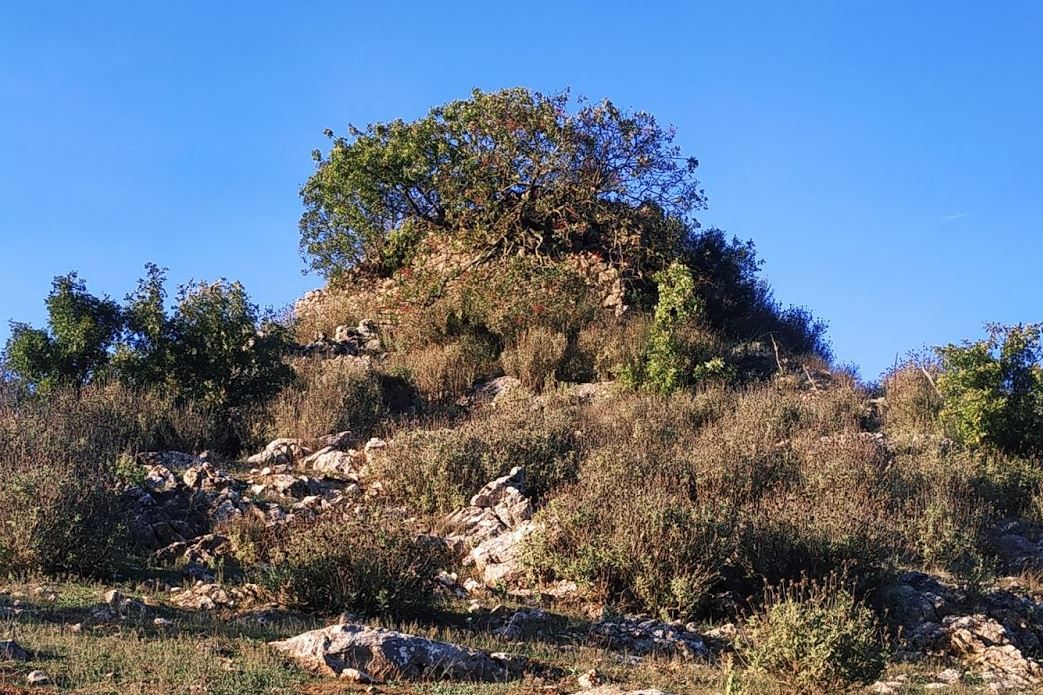
A lone tower, reduced to a broken stump of masonry, stands on a hill three kilometres west of the modern village of Kleitoria and a short distance from the site of Kleitor, an important ancient city of Arcadia. Its history is almost entirely obscure. Some scholars, including Papandreou in 1928 and Ballas in 1996-97, have suggested a late Byzantine origin, placing it between the thirteenth and fifteenth centuries. Another authority, Antoine Bonn, dismissed it in 1989 as merely an Ottoman mansion. The truth is that the evidence is too thin for certainty: it might have been a tower of an unknown Frankish fief, a Byzantine construction after they regained the region in the fourteenth century, or indeed a Turkish-era building.
The structure itself is rectangular, measuring 8.5 by 6.0 metres, built of semi-processed stone and mortar. Much has collapsed; the southern wall survives to three metres, the eastern to only two. Wall thickness varies from 1.2 to 2 metres. Inside, at ground level, are the remains of a vaulted, two-chambered cistern, while traces of other stone foundations around the tower hint at auxiliary buildings or an outer enclosure.
- Kastra.eu, Castles of Greece · reference
Coordinates and heritage data compiled in the Atika atlas.