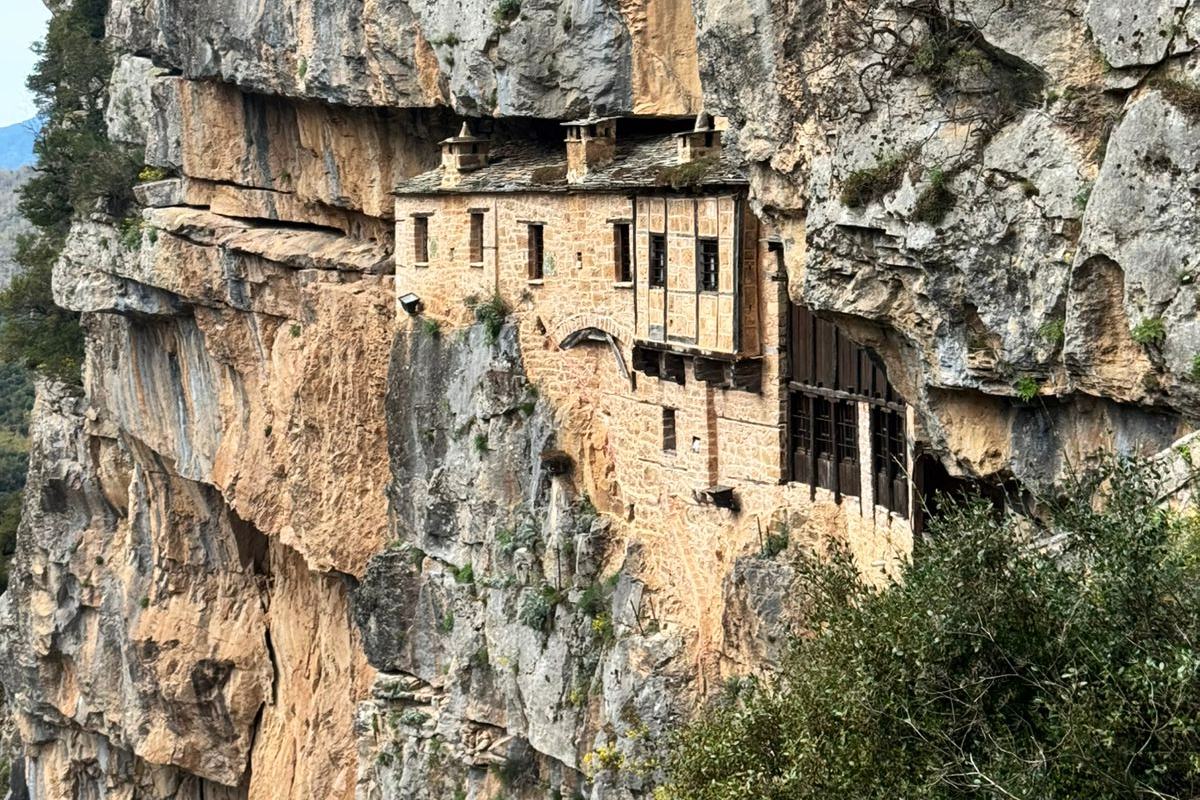
Kipina
The Holy Monastery of Kipina is a cave dwelling wedged into a sheer cliff above the Kalarrytikos River gorge in the Tzoumerka mountains, south of Kalarrytes village. Its name comes from the orchards the monks once cultivated by the river below. Tradition credits its founding to Archbishop Gregory in 1212, though another account has it established by monks who split from the nearby Vyliza monastery over a disputed abbot election, a tale that sits awkwardly with Vyliza's later attested dates. The monastery reached its modest zenith in the eighteenth and nineteenth centuries, when its frescoes and iconostasis (the latter stolen in 1997) were created. Early nineteenth-century travellers William Leake and François Pouqueville, both visitors to Ali Pasha's court, noted it chiefly for its cave. The last monk died in 1944, though the buildings remain maintained and staffed. Its only fortification was a wooden bridge spanning a four-metre gap in the rock path. The cave itself, explored by Anna Petrocheilou in 1956, runs 240 metres with a nine-metre ceiling. The church's carved rock dome, frescoed but smoke-blackened, is the architectural highlight.
- Kastra.eu, Castles of Greece · reference
Coordinates and heritage data compiled in the Atika atlas.