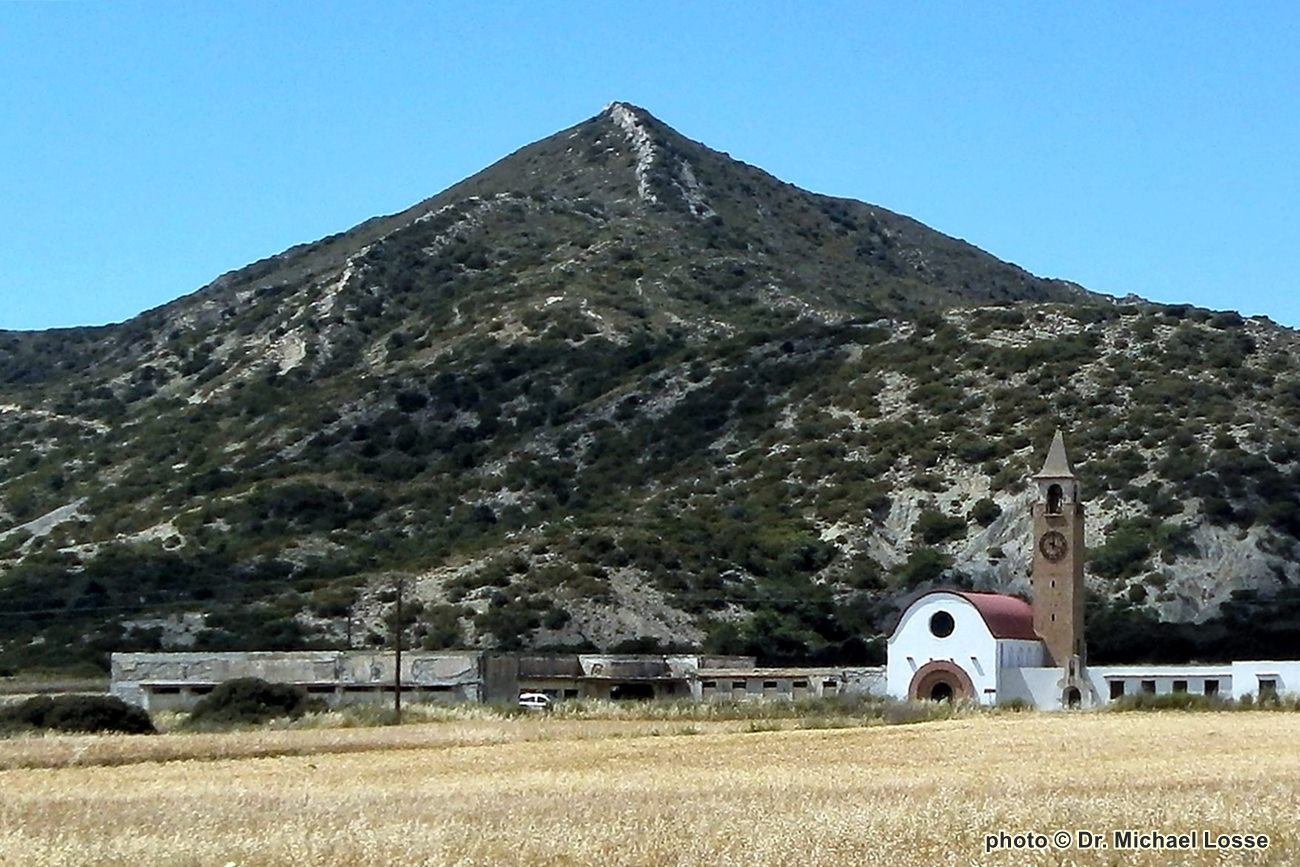
Kattavia
On the hill of Piliokastro, nearly two kilometres east-northeast of Kattavia, the southernmost village of Rhodes, stands a Byzantine castle of uncertain origin. The flattened, step-like limestone summit, 259 metres high, dominates the eastern approach to the plain. Below the inner castle lies an outer bailey or fortified settlement, where a remarkable cistern survives: a two-naved, barrel-vaulted building over ten metres long, divided by an arch-pierced wall, with its stairway and patches of plaster still intact. The inner enceinte, built without mortar from quarry stone, is roughly oval and over a metre thick, with no brick courses. Its interior was altered by Italian forces during the Second World War, whose trenches and fortifications remain visible. From the summit, sightlines reach other Byzantine defences across southern Rhodes, including Vigla and Mount Vouni. The site offers fine views but no path; access is across open, bushy ground. It awaits proper archaeological study.
- Kastra.eu, Castles of Greece · reference
Coordinates and heritage data compiled in the Atika atlas.