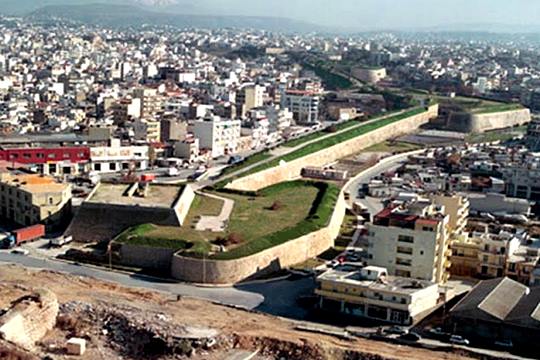
Heraclion walls
The great ring of defences around Heraklion is the finest surviving fortification of its age in the Mediterranean, a Venetian project begun in 1462 and built over more than a century. The site had been fortified since antiquity, when the port served Minoan Knossos, and later the Saracen Arabs, who took Crete in 824, raised a wall of unbaked brick mixed with goat and pig hair, surrounding it with a ditch they could flood from the sea in an hour. That trench gave the city its long-lived Arabic name, Rabdh el Khantak, which became Chandax and then Candia. After Nikephoros Phocas reclaimed the island for Byzantium in 961, he demolished these works, but new walls rose, only to be replaced by the present Venetian circuit. Triangular in plan, three kilometres long, it has seven bastions, three land gates and a harbour gate, with outworks called revelini beyond the dry moat. The whole survives in relatively good condition.
- Kastra.eu, Castles of Greece · reference
Coordinates and heritage data compiled in the Atika atlas.