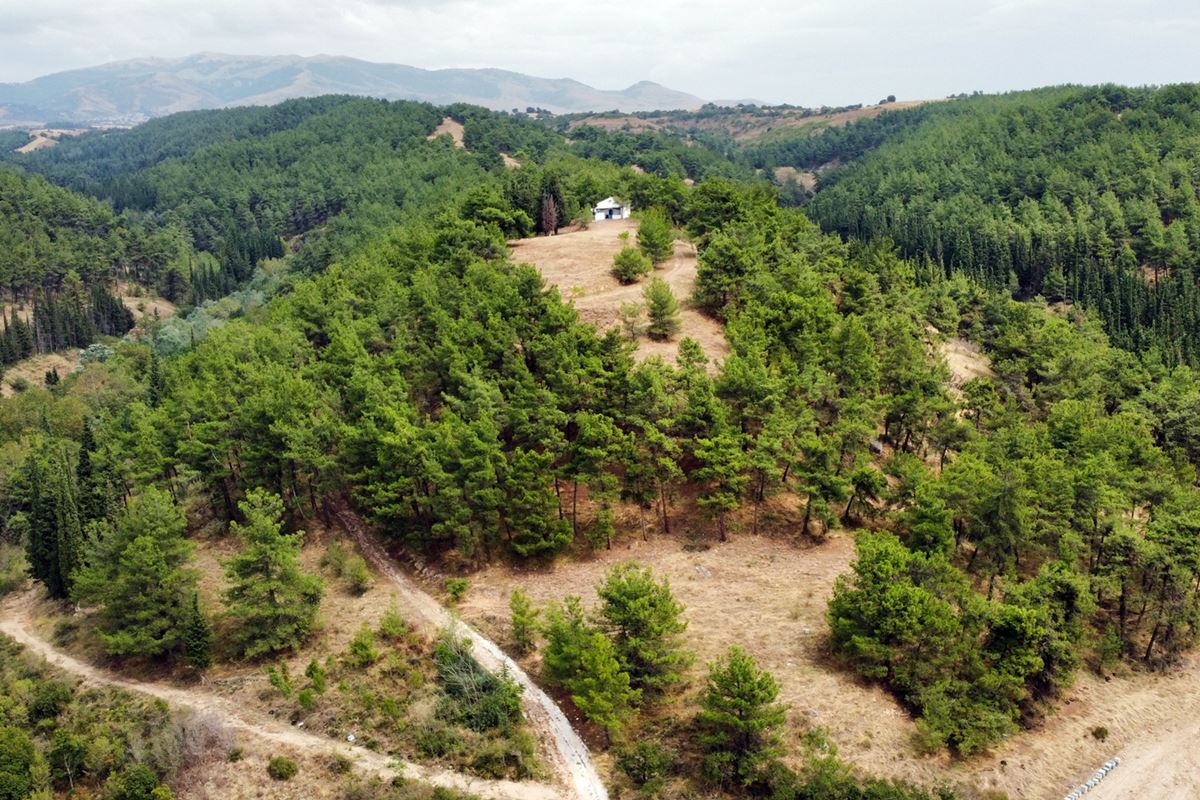
Gazoros
On the hill of Agios Athanasios, northeast of the modern village of Gazoros in the Serres prefecture, lie the scant remains of an ancient city identified with the Gazoros mentioned by Ptolemy in the second century AD and by Stephanus of Byzantium six centuries later. Two inscriptions, one from 158-9 AD found in 1958 and a Hellenistic text discovered in 1964, confirmed the site's identity. The city flourished in Roman times, likely as part of a five-city league, and was a cult centre for Artemis Gazoria. Its surviving walls, however, appear Byzantine, suggesting the settlement shrank to the acropolis plateau and persisted into the Early Byzantine period before likely falling to fifth-to-seventh-century raids. Today only fragments remain: an eight-metre stretch of wall on the northwest slope, a twelve-metre section on the eastern side, and foundations of rectangular buildings near the church. Built of mudstone with lime mortar, the walls date perhaps to the third or fourth century AD. The hill's perimeter measures roughly 450-500 metres, though pine planting has disturbed much of the site.
- Kastra.eu, Castles of Greece · reference
Coordinates and heritage data compiled in the Atika atlas.