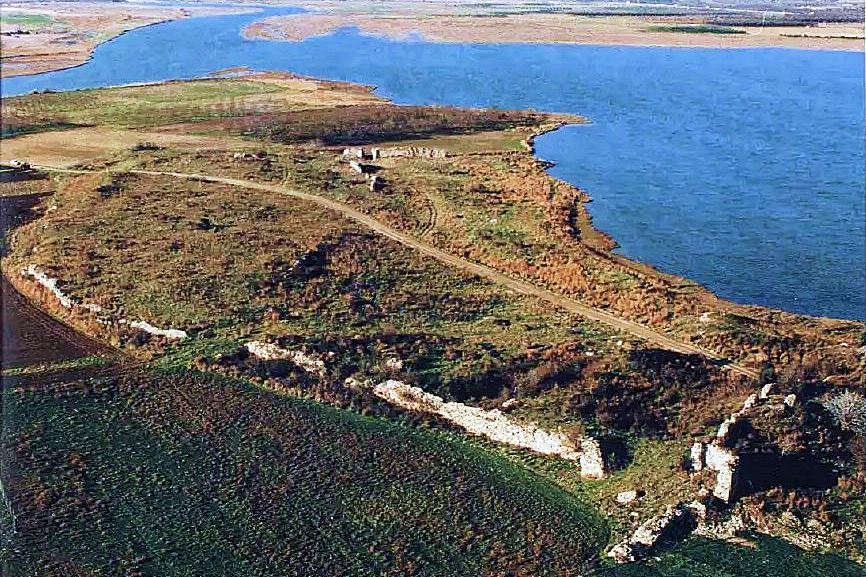
Chrysopolis
Chrysopolis, a Byzantine port city that rose to prominence after the tenth century, occupied a lagoon at the Strymonas river delta, close to Amphipolis and not to be confused with the modern town of the same name east of Kavala. It effectively succeeded the early Christian city of Amphipolis, which had fallen out of use by the seventh century. The settlement gathered the valley's commercial activity and functioned as a busy harbour. Its strategic value was recognised in the fourteenth century, when Andronicos III Palaiologos included it among the positions to fortify during the civil war of 1321 to 1328. In 1357, Emperor Ioannis E' Palaiologos granted it to the brothers Alexios and Ioannis, who had taken it from the Serbs. The Ottomans captured it around 1380, yet it remained a trading hub on the Thessaloniki to Constantinople route. By the sixteenth century the city was largely abandoned, though the harbour saw continued use. The surviving fortification, traceable across all sides, includes a zigzag northern wall along the lagoon, a western gate, an eastern entrance flanked by square towers, and a southern tower standing about five metres high, the best-preserved element.
- Kastra.eu, Castles of Greece · reference
Coordinates and heritage data compiled in the Atika atlas.