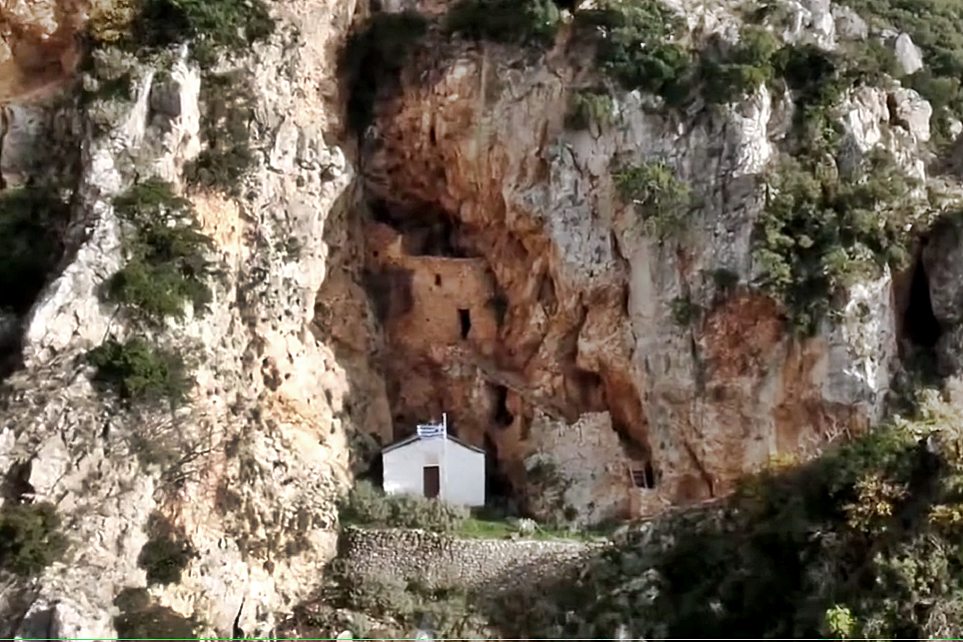
Agios Taxiarchis
East of the village of Raftis in Gortynia, a cave holds a chapel to Agios Taxiarchis and a rough ring of defensive walls. Such Peloponnesian caves had served as hermits' retreats since Byzantine times, but from the seventeenth century they were increasingly adapted into hideouts for the klephtes, and during the War of Independence they sheltered local families. This particular example follows that pattern, though its precise story is lost. An inscription carved into the church bears the date 1697, which pins down the final shaping of the cave-fortress with reasonable confidence. The condition today is not good. A short walk of 700 metres to the south stands another, more strongly fortified cave-castle, known as Kokoreiki and Rafteiki Poulia, which suggests this whole cliffside was a network of refuges. The site remains a curious relic of a time when piety, banditry and survival shared the same stone.
- Kastra.eu, Castles of Greece · reference
Coordinates and heritage data compiled in the Atika atlas.