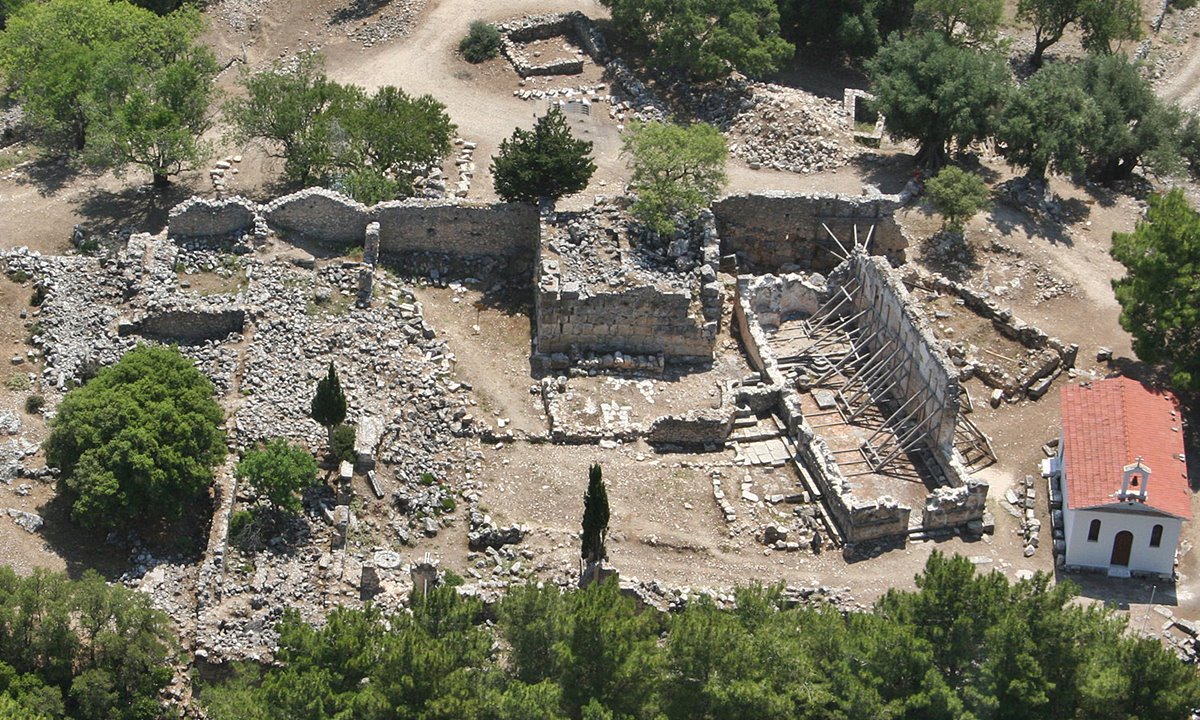
Agioi Fanentes
The monastery of Agioi Fanentes occupies the southern hill of ancient Sami’s acropolis, a spot once called Kyatis, on Kefalonia. Its foundation date is uncertain, but it certainly existed by the Middle Byzantine period, perhaps as early as the twelfth century. The three saints commemorated were Roman soldiers, Theodore, Gregory and Leo, who withdrew from the army in the fourth century to live as hermits above Sami, avoiding the Arianism of Emperor Constantius II. Their relics were discovered centuries later in a cave by a swineherd, after a leprous local named Michael dreamed of them and was cured. The monastery is first documented in a Latin synaxarion of 1264. It was renovated in 1633 under Abbot Seraphim Zervos, and again in 1654, enjoying prosperity through the seventeenth and eighteenth centuries. Decline followed British restrictions after 1805, and the 1953 earthquake completed the ruin. The enclosure runs 175 metres around a 2,000 square metre complex, incorporating ancient walls and a massive tower base. The relics, long thought lost, were identified in Venice and partly returned in 2009.
- Kastra.eu, Castles of Greece · reference
Coordinates and heritage data compiled in the Atika atlas.