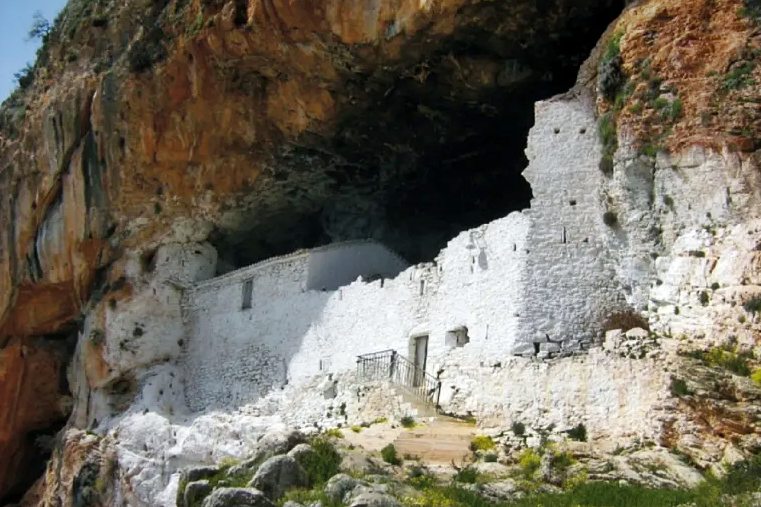
Agia Rousali
The cave of Agia Rousali sits in a deserted, rocky corner of Argolis, eight kilometres west of Argos and a short scramble from the villages of Vrousti and Chouni. Reaching it means taking a rough dirt track off the Vrousti road, or following an unmarked path from Chouni for those who enjoy a bit of adventure. It is a castle-cave, a natural hollow adapted for defence and refuge, and its condition today is poor. Such caves across the Peloponnese began life as Byzantine hermitages, places of prayer for solitary monks. Over the centuries, chapels and crude fortifications were added, and by the seventeenth and eighteenth centuries many had become hideouts for the kleftes, the armed resistance fighters of the Ottoman period. During the War of Independence in 1821, local people used them as shelters. Agia Rousali almost certainly shared this fate, though the details are thin. What is known is that around 1821 it served as the den of Giannakos Dagres, a local warlord.
- Kastra.eu, Castles of Greece · reference
Coordinates and heritage data compiled in the Atika atlas.